I used to be scared of prime rib. It is a pricey piece of meat. The thought of ruining a $100 roast kept me up at night. But last Sunday, I finally did it. The sun was out. My backyard smelled like wood smoke. I sat on my porch with a cold drink and waited. What happened next was the best meal of my life.
I want to share my story with you. I will tell you what worked. I will also tell you what went wrong. If you want to make a Smoked Prime Rib with Cowboy Butter, you are in the right place. This is not a dry manual. This is a talk between friends.
Why I Chose the Smoked Prime Rib Path
I usually cook steak in a pan. It is fast and easy. But a big roast feels special. I had my family coming over for a late lunch. I wanted something that looked grand. I also wanted that deep, smoky taste you can only get from a real fire.
The Smoked Prime Rib is a slow process. It forces you to relax. You cannot rush it. I chose a four-bone roast. It weighed about nine pounds. It was thick and had beautiful white fat. I knew that fat would melt like gold in the smoker.
Choosing the Right Meat for Smoking
I went to my local butcher on Friday. I asked for a “Prime” grade roast. You can use “Choice,” but “Prime” has more marbling. Marbling is just a fancy word for fat inside the muscle. That fat keeps the meat juicy while it sits in the smoke.
| Feature | What I Looked For | Why It Matters |
| Grade | Prime Grade | Better fat and more flavor |
| Cut | Bone-in | The bones protect the meat from heat |
| Size | 9 Pounds | Fed my whole group with leftovers |
| Color | Bright Red | Shows the meat is fresh |
The Prep Work That Changed Everything
I learned a big lesson on Saturday. Do not wait until the last minute to season your meat. I used a method called a dry brine. All I did was rub the meat with salt and pepper. Then, I put it in the fridge for a full night.
The Power of the Dry Brine
When you salt early, the salt goes deep. It breaks down the proteins. This makes the meat tender. Also, the cold air in the fridge dries the surface. This sounds bad, but it is great. A dry surface means a better crust.
I did not use a binder like mustard or oil. I just pressed the salt into the fat. It felt like I was prepping a work of art. I used coarse salt because it is easier to see how much you use.
Fire and Smoke: My Sunday Morning
I woke up at 7:00 AM. The air was crisp. I started my smoker and chose oak wood. Oak is strong but not too sweet. I wanted the beef to be the star. I set the temp to 225 degrees. This is the magic number for a Smoked Prime Rib.
Setting Up the Smoker
I put a pan of water under the rack. This keeps the air moist. I did not want the outside of my roast to turn into leather. I placed the roast bone-side down. The bones act like a heat shield. They take the brunt of the fire so the meat stays soft.
Watching the Temp Not the Clock
This is where I almost messed up. I kept checking the clock. But meat does not care about time. It only cares about heat. I used a digital probe. I stuck it right in the center of the roast. My goal was 120 degrees.
I spent most of the morning just watching the smoke rise. It was very peaceful. My neighbor came over to ask what smelled so good. That is when I knew I was on the right track.
The Secret Weapon: My Cowboy Butter Experience
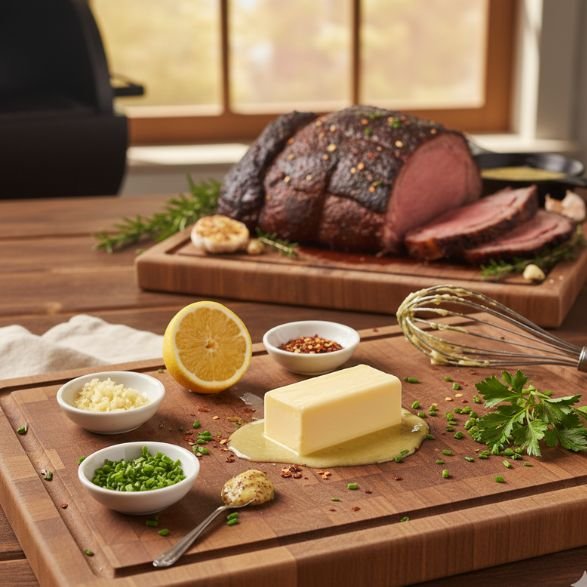
While the meat was smoking, I made the Cowboy Butter. I had heard people rave about this sauce. Now I know why. It is not just butter. It is a punch of flavor.
I melted two sticks of butter in a small pan. I added garlic, lemon, and herbs. The smell was incredible. It was sharp and fresh. It was the perfect match for the heavy, fatty beef.
Why Cowboy Butter Works So Well
Prime rib is very rich. Sometimes it can feel too heavy. The lemon juice and Dijon mustard in the butter cut through that fat. The red pepper flakes give it a tiny kick. It wakes up your tongue.
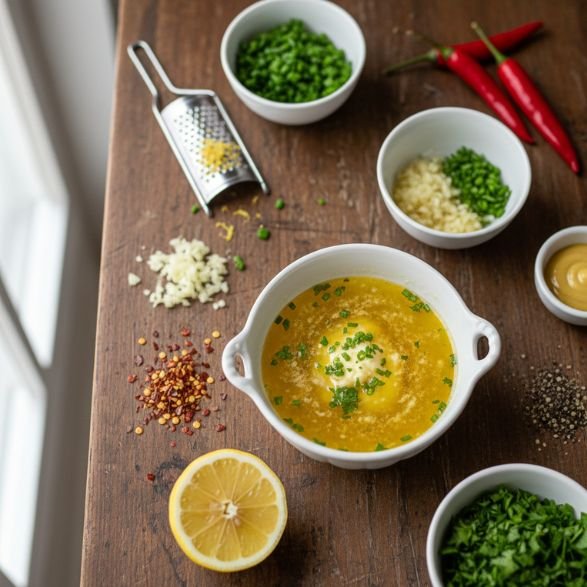
My Cowboy Butter Ingredients Table
| Ingredient | My Personal Note | Role in the Dish |
| Butter | Use salted butter | The creamy base |
| Garlic | I used five cloves | Adds a savory bite |
| Lemon | Fresh squeezed | Cuts through the heavy fat |
| Parsley | Flat leaf is best | Adds a fresh, green taste |
| Paprika | I used the smoked kind | Links the sauce to the meat |
The Scariest Part: The Reverse Sear
At around noon, my probe hit 120 degrees. The meat looked brown and dull. It did not look like the photos yet. This is because I cooked it low and slow. To get that dark, crispy crust, I had to sear it.
High Heat for the Win
I took the roast out and let it sit. I cranked my grill as high as it would go. I felt the heat on my face. I put the roast back on for just three minutes. The fat started to sizzle and pop. The smell changed from “smoke” to “steakhouse.”
I was worried I would overcook it. My heart was racing. But I stuck to my plan. Three minutes, then I pulled it off.
The Hardest Step: The Rest
I brought the meat inside. It looked perfect. My family was hungry. They wanted to eat right then. I had to say no. A Smoked Prime Rib must rest.
I let it sit on the counter for 30 minutes. If you cut it too soon, all the juice runs out. You end up with dry meat and a wet plate. While it rested, the heat stayed inside. The temp rose to 132 degrees. That is a perfect medium-rare.
The Moment of Truth
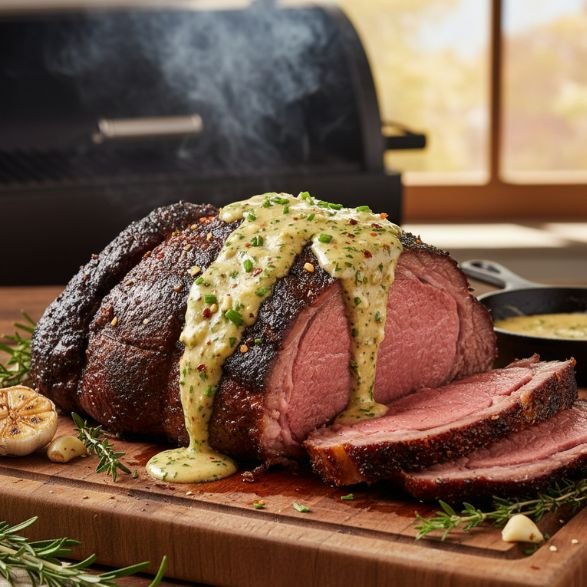
I picked up my sharpest knife. I cut the strings and pulled the bones away. Then, I sliced into the center. It was pink from edge to edge. There was no grey ring of overcooked meat.
I put a thick slice on a plate. I took a spoon and drizzled the warm Cowboy Butter over the top. The butter melted into the cracks of the meat.
How It Tasted
The first bite was soft. The smoke hit me first. It was subtle, not like a campfire. Then came the salt and the beef flavor. Finally, the butter kicked in. It was garlicky and tangy. My sister didn’t even use a fork. She just stared at the plate for a second.
What I Would Do Differently Next Time
I am being honest with you. It was not 100% perfect. I think I used a bit too much red pepper in my butter. It was a little spicy for my kids. Next time, I will use half the amount.
Also, I should have bought a bigger roast. Even with nine pounds, there were no leftovers. Everyone wanted seconds. If you are cooking for six people, buy more than you think you need.
Essential Tools for Your Smoking Journey
You do not need a lot of gear. But a few things make life easy. I used a simple pellet smoker. You can use charcoal too. The most important tool is a good meat thermometer. Without it, you are just guessing. And guessing with a prime rib is a bad idea.
My Tool Checklist
- Digital Thermometer: To track the heart of the meat.
- Sharp Knife: For clean slices that do not tear.
- Cast Iron Pan: If you want to sear on the stove.
- Butcher’s Twine: To keep the roast in a round shape.
Frequently Asked Questions
How long does it take to smoke a prime rib?
The general rule is about 30 minutes per pound when smoking at 225°F. However, every roast and every smoker is different. I always suggest cooking by internal temperature rather than time. I pull mine when the center hits 120°F for a perfect medium-rare after the final sear.
Should I cook the roast bone-in or boneless?
I personally love a bone-in roast. The bones act as a natural rack and protect the meat from the direct heat of the smoker. They also add a lot of flavor. If you choose boneless, it will cook slightly faster, so keep a close eye on your meat thermometer.
What is Cowboy Butter and can I make it ahead?
Cowboy Butter is a bold, melted dipping sauce made with butter, lemon, garlic, Dijon mustard, and herbs like parsley and chives. Yes, you can make it 2 to 3 days ahead. Just store it in the fridge and gently melt it on the stove when you are ready to serve.
| Cowboy Butter Ingredient | The Role It Plays |
| Lemon Juice/Zest | Cuts through the rich fat of the beef. |
| Dijon Mustard | Adds a sharp, tangy kick. |
| Red Pepper Flakes | Provides a subtle “cowboy” heat. |
| Fresh Herbs | Brightens up the heavy, smoky flavors. |
Do I need to sear the meat after smoking it?
Yes! This is called a reverse sear. Smoking gives you the flavor and even pink color, but a high-heat sear at the end gives you that crispy, brown crust. I use a hot cast-iron skillet or turn my grill up to 500°F for the last few minutes.
How long should the prime rib rest before slicing?
This is the most important step. Let your roast rest for at least 20 to 30 minutes. If you cut it too soon, all those delicious juices will run out onto the board, and your meat will be dry. Tent it loosely with foil to keep it warm while it rests.
Which wood pellets or chips work best for beef?
I prefer heavy woods like hickory or oak for prime rib. They stand up well to the bold flavor of the beef. If you want something a bit sweeter, a blend of cherry and hickory is a fantastic choice that creates a beautiful red “smoke ring.”
How do I store and reheat leftovers?
Wrap leftovers tightly in foil. To reheat without losing the medium-rare center, place slices in a baking dish with a splash of beef broth. Cover with foil and warm in the oven at 250°F until just heated through.
Final Thoughts on This Meat Masterpiece
Cooking a Smoked Prime Rib with Cowboy Butter changed how I think about BBQ. It showed me that patience pays off. It is not just about the food. It is about the morning spent outside. It is about the look on your friends’ faces when they see the crust.
If you are on the fence, just do it. Find a good butcher. Pick a sunny day. Take your time. You will feel like a pro, and you will eat like a king.
I can help you plan your next cook. Would you like me to create a custom grocery list for your specific number of guests?