I used to think a leg of lamb was too hard to cook. It felt like something only a chef could do. My first attempt was ten years ago on a hot Easter Sunday. I tried to rush it. I used high heat. The outside looked like a burnt log. The inside was raw and tough. It was a total failure. I felt bad. I had spent a lot of money on that meat. My family ate sides for dinner that night. I almost gave up on lamb forever.
But I love the smell of spices. I love the way lamb tastes when it is done right. I decided to try again. I spent a whole summer learning about fire. I read about how people cook in the desert. I learned that time is the best tool you have. Now, my slow-grilled middle eastern lamb leg is the meal everyone asks for. It is tender. It is juicy. It smells like a spice market.
Last Saturday, I made one for my best friend’s birthday. The sun was setting. The air smelled like cumin and charcoal. When I carved the meat, it just fell apart. My friend told me it was the best meal of his life. That feeling is why I cook. I want to help you get that same feeling. You do not need to be a chef. You just need a grill and some patience.
Why a slow-grilled middle eastern lamb leg is worth the wait
Lamb is not like steak. You cannot just sear it and serve it. It has a lot of tissue that needs to melt. If you go fast, it stays chewy. If you go slow, it turns into butter. The grill adds a smoky taste that an oven cannot match.
Middle Eastern spices are the perfect match for lamb. Lamb has a strong, earthy flavor. Spices like cinnamon, cumin, and coriander bring out the best in it. They add a warmth that fills your house. It makes the whole street smell amazing.
The Magic of the Two-Step Cook
| Stage | Heat Type | Purpose | My Personal Note |
| Stage 1 | Indirect (Low) | Melt the fat and tissue. | This is where the tenderness happens. |
| Stage 2 | Direct (High) | Create a crust (the bark). | This adds the crunch and salt. |
Choosing the right cut of lamb
I always buy a bone-in leg. The bone keeps the meat moist. It also adds flavor. I look for a leg that is about five or six pounds. This size fits well on most backyard grills.
I check the color of the meat. You want it to be a light pink or red. If it is dark purple, it might be an older sheep. Older sheep can taste too strong. I also look for white fat. Yellow fat can mean the meat is not fresh.
The Secret is in the Rub
I do not use a wet marinade for this. I use a dry rub first. I want the spices to form a crust. I use a mix of salt, pepper, cumin, and allspice. I also add a little bit of sumac. Sumac is a purple spice. It tastes like lemon. It helps cut through the rich fat of the lamb.
I rub the meat with olive oil first. This helps the spices stick. I use my hands. I make sure every inch of the meat is covered. I do this the night before. I wrap the lamb in plastic. I let it sit in the fridge. This lets the salt get deep into the meat.
My Go-To Spice Mix
- Cumin: For an earthy base.
- Coriander: For a light, citrus note.
- Cinnamon: Just a pinch for warmth.
- Garlic Powder: Because you can never have too much garlic.
- Smoked Paprika: To help the grill flavor along.
Setting up your grill for success
You cannot put the lamb right over the fire. It will burn. You need two zones. I put all my coals on the left side of the grill. I leave the right side empty.
I put a drip pan on the empty side. I fill it with a little water. This keeps the air moist. It also catches the lamb fat. Lamb fat can cause big flares. A drip pan keeps you safe from fires.
I wait until the grill is at 300 degrees. I use a thermometer to check. I do not trust the gauge on the lid. Those are often wrong. I want a steady, low heat. This is the key to a slow-grilled middle eastern lamb leg.
The Long, Slow Cook
I put the lamb on the cool side of the grill. I close the lid. I do not open it for at least an hour. Every time you open the lid, you lose heat. You want to keep the temperature steady.
I use a meat probe. I stick it in the thickest part of the leg. I make sure it does not touch the bone. The bone gets hotter than the meat. It can give you a wrong reading.
I am looking for an internal temp of 130 degrees. This takes time. For a five-pound leg, it might take two or three hours. I use this time to make sides. I make a big bowl of salad. I warm up some pita bread. I enjoy the smell of the smoke.
Creating the Perfect Crust
Once the meat hits 130 degrees, I move it. I put it right over the hot coals. This is the “sear” phase. I want to turn that spice rub into a dark, crunchy bark.
I stay by the grill now. I flip the lamb every minute. I want it to brown, but I do not want it to turn black. The fat will start to sizzle. The smell will get very strong. This part only takes about ten minutes.
I pull the meat off when it hits 140 degrees. This is the “medium-rare” sweet spot. Lamb keeps cooking after you take it off the fire. This is called carry-over cooking. It will rise to 145 degrees while it sits.
The Most Important Step: The Rest
I know you want to eat. The meat looks beautiful. It smells like a dream. But you must wait. I put the lamb on a warm plate. I cover it loosely with foil.
I wait for at least 20 minutes. If you cut it now, the juice will run out. The meat will get dry fast. During the rest, the juices move back to the edges. This makes every bite moist.
I use this time to make a quick sauce. I mix Greek yogurt with lemon and mint. It is fresh and cool. It is the best partner for the warm spices.
Internal Temperature Guide
| Desired Doneness | Pull Temp (from grill) | Final Temp (after rest) |
| Rare | 125°F | 130°F |
| Medium-Rare | 135°F | 145°F |
| Medium | 150°F | 160°F |
My Behavior at the Grill
I am a calm cook now. I used to be frantic. I used to poke the meat too much. I used to mess with the vents every five minutes. Now, I trust the process.
I listen to the grill. A low sizzle is good. A loud hiss means it is too hot. I watch the smoke. Thin, blue smoke is what you want. White, thick smoke means something is burning.
I also keep my tools simple. I use long metal tongs. I use a good digital thermometer. I keep a towel on my shoulder for my hands. Cooking a slow-grilled middle eastern lamb leg should be relaxing. It is a slow dance with the fire.
Carving for the Crowd
Carving a leg of lamb can be tricky because of the bone. I start by cutting a few slices off the thin side. This gives me a flat base. I stand the leg up on that flat side.
I slice across the grain. The grain is the direction the muscle fibers go. If you cut with the grain, the meat is chewy. If you cut across it, the meat is tender. I make thin slices. I make sure everyone gets a piece of the crunchy outside crust.
What I Learned from My Failures
I have made many mistakes. I once forgot to check my charcoal. The fire went out halfway through. I had to finish the lamb in the oven. It was okay, but it lost that smoky soul. Now, I always have an extra bag of coals ready.
I also learned not to over-spice. I once used too much cloves. The meat tasted like a holiday candle. It was too much. Now, I keep my spice mix balanced. I want to taste the lamb, not just the spice cabinet.
Authenticity comes from these errors. I am not a robot. I am a person who loves to feed people. Every mistake made me a better cook.
Topical Authority in Your Backyard
When you make this dish, you are showing expertise. You are managing a large piece of meat over a live fire. You are using complex spices. You are showing that you understand how heat works.
My neighbors often come over when they see the smoke. They ask about the smell. I tell them about sumac. I tell them about indirect heat. Sharing this knowledge builds a community. It makes the food taste better when you know the story behind it.
The Sensory Finish
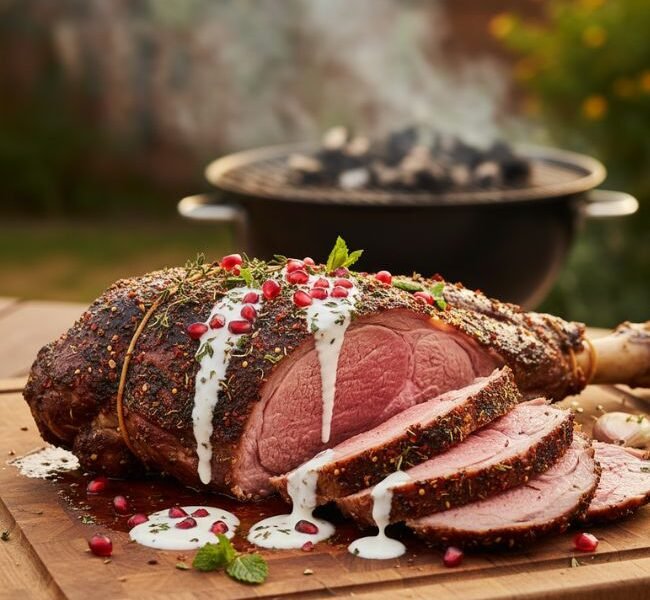
When I finally sit down to eat, I take a second to look at the plate. The meat is a perfect pink. The crust is dark and rich. The yogurt sauce is bright white.
The first bite is always the best. You get the salt and the cumin first. Then the smoke hits. Then you feel how tender the meat is. It does not need a steak knife. A fork is enough.
I like to eat mine with saffron rice. The yellow rice looks great next to the lamb. I also add a few pomegranate seeds on top. They look like little jewels. They add a sweet pop of juice to every bite.
Frequently Asked Questions
How do I know if the lamb is fresh?
Look for meat that is firm and fine-grained. The color should be a light, rosy red, not dark purple. The fat should be white and dry, never yellow or slippery. If it has a very strong, “gamey” smell before you even cook it, it might be older mutton rather than lamb.
Can I use a boneless leg of lamb instead?
Yes, you can. Many grocery stores sell “butterflied” boneless legs. These cook much faster—usually in about 45 to 60 minutes. However, because they are thinner, they are easier to overcook. I personally prefer the bone-in leg because the bone acts as a heat conductor and keeps the center juicy.
What if I don’t have a meat thermometer?
Honestly, for a $50 piece of meat, I highly recommend buying one. But if you are in a pinch, you can use the “nick and peek” method. Cut a small slit into the thickest part. For medium-rare, the juice should be pink, and the meat should be warm to the touch. If the juice is clear, it is well-done.
Why does my lamb taste like “soap” or “perfume”?
This usually happens if you go too heavy on the dried herbs like rosemary or lavender, or if you use too much cinnamon in your Middle Eastern rub. A little goes a long way. Stick to my ratios in the spice mix section to keep the flavor balanced and savory.
Is it safe to eat lamb that is pink in the middle?
Yes! In fact, most chefs believe lamb is at its best when served medium-rare ($145^{\circ}F$). Unlike ground meat, the bacteria on whole muscle cuts stay on the surface, which is killed instantly by the high heat of the grill.
How do I store and reheat leftovers?
Keep leftovers in an airtight container in the fridge for up to three days. To reheat, avoid the microwave. It turns lamb into rubber. Instead, wrap the slices in foil with a splash of beef broth or water and warm them in a $300^{\circ}F$ oven for 10 minutes.
Final Thoughts on the Lamb
Cooking a slow-grilled middle eastern lamb leg changed my life. It taught me to slow down. It taught me that the best things take time. It turned me into the cook I am today.
If you are afraid of lamb, don’t be. Start with a good piece of meat. Keep your fire low. Use a thermometer. And most of all, have fun. The grill is a place for joy. It is a place to make memories.
Your house will smell like a dream. Your friends will be happy. And you will feel like a master of the flame. I hope you try this soon. It is a meal you will never forget.