You know that feeling when you open your fridge, excited to make a fresh salad, only to find your lettuce turning brown and wilted? It’s frustrating and wastes your money.
But what if you could keep your lettuce crisp and green for much longer? You’ll discover simple, effective ways to stop lettuce from browning. These easy tips will save you time, reduce waste, and help your meals stay fresh and tasty.
Keep reading to learn how to make your lettuce last as long as possible!
Causes Of Lettuce Browning
Enzymatic browning happens when lettuce is cut or bruised. The enzyme called polyphenol oxidase reacts with oxygen. This reaction makes the lettuce turn brown and look less fresh. The browning does not mean the lettuce is bad, but it looks less tasty.
Temperature affects how fast browning happens. If lettuce is kept too warm, browning speeds up. Cold temperatures slow down the enzyme activity, keeping lettuce fresh longer. Storing lettuce in the fridge helps prevent quick browning.
Moisture also plays a big role. Too much moisture can make lettuce soggy and speed up browning. Too little moisture causes lettuce to dry out and brown on edges. Keeping lettuce dry but not too dry is best to avoid browning.
Selecting Fresh Lettuce
Choose lettuce with crisp, firm leaves. Soft or wilted leaves show age or damage. Bright green color means fresh lettuce. Avoid leaves that are yellow or brown.
Heads of lettuce should be tight and compact. Loose or falling leaves mean the lettuce is old. Check for spots or bruises on the leaves. Damaged parts can make lettuce brown faster.
Hold the lettuce gently. Too much pressure can cause bruises. Choose heads without cuts or tears. These small breaks cause faster browning and spoilage.
Proper Washing Techniques
Rinse lettuce leaves under cold water to keep them fresh. Cold water helps remove dirt and slows down browning. Avoid warm or hot water, which can make lettuce wilt faster.
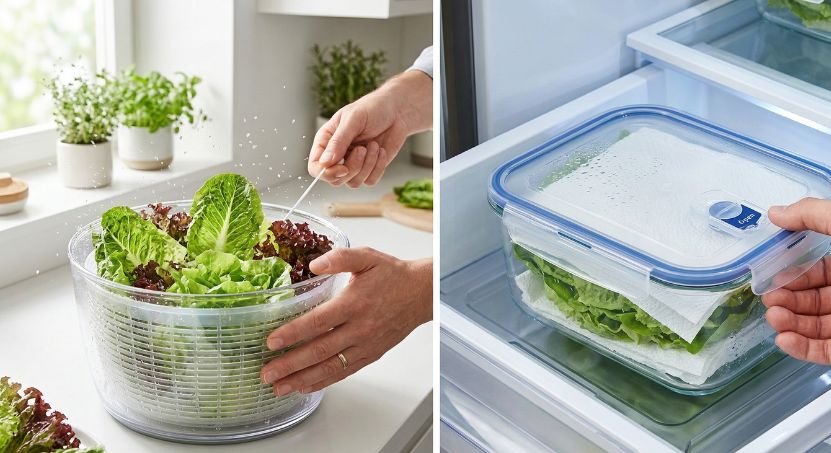
After washing, dry lettuce gently. Use a clean kitchen towel or a salad spinner. Gently pat or spin the leaves to remove excess water. Too much water can cause leaves to turn brown quickly.
Storage Tips To Keep Lettuce Fresh
Keep lettuce at a cool temperature, ideally between 32°F and 36°F. This slows down browning and keeps leaves crisp. Avoid storing lettuce near fruits like apples or bananas, which release gases that speed up spoilage.
Store lettuce in airtight containers or sealed plastic bags. This keeps moisture inside and air out. Too much air causes leaves to dry and turn brown faster.
Using a paper towel inside the container helps absorb extra moisture. Change the paper towel if it gets very wet. This simple trick prevents soggy leaves and brown spots.
Preventing Browning During Preparation
Use a sharp knife to cut lettuce. Dull knives bruise leaves, causing browning. Cut leaves gently to avoid damage. Handle lettuce with clean, dry hands to keep it fresh longer.
Soaking lettuce in cold water helps keep it crisp. After cutting, rinse leaves under cold water to remove dirt and slow browning. Dry leaves well using a salad spinner or clean towel.
Applying acidic solutions like lemon juice or vinegar slows browning. Mix 1 tablespoon of lemon juice or vinegar in 1 cup of water. Soak lettuce for a few minutes, then drain and dry.
| Tip | Reason |
|---|---|
| Use sharp knife | Prevents bruising and browning |
| Rinse in cold water | Keeps leaves fresh and clean |
| Dry leaves well | Stops water from causing rot |
| Use lemon juice or vinegar | Slows down browning process |
Reviving Slightly Brown Lettuce
Soaking slightly brown lettuce in ice water can help bring back its crispness. The cold water slows down the browning process and refreshes the leaves. Leave the lettuce in ice water for about 10 to 15 minutes. After soaking, gently pat the leaves dry with a clean towel to avoid sogginess.
Freshening with lemon juice also works well. The natural acid in lemon juice helps stop the lettuce from turning brown faster. Lightly sprinkle or brush a small amount of lemon juice on the leaves. This method keeps the lettuce looking bright and fresh for a longer time.
Conclusion
Keep lettuce fresh by storing it in a cool, dry place. Use a paper towel to absorb extra moisture inside the container. Wash lettuce only before eating, not before storing. Cut off brown edges quickly to stop spreading. Check your lettuce often and use it soon.
These small steps help your lettuce stay green and tasty longer. Simple care makes a big difference in freshness. Enjoy crisp, healthy leaves every time you eat.