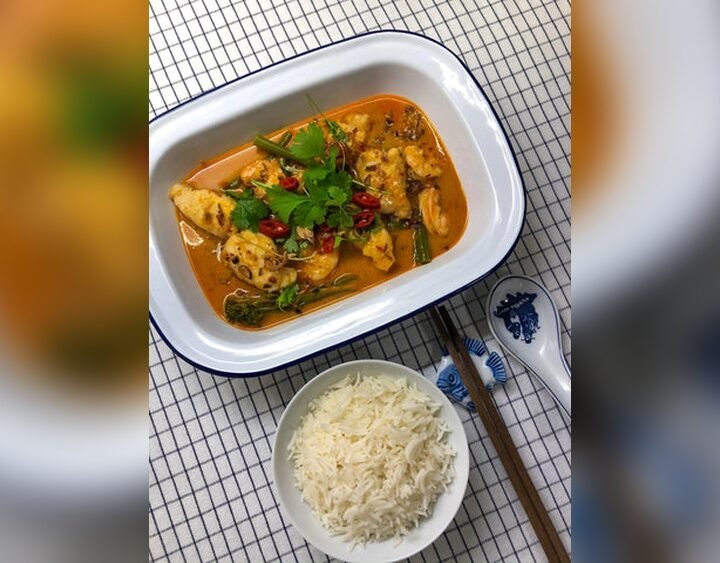
Thai Red Penang Style Curry With Fish Prawns: My Honest Experience
When I first tried making Thai Red Penang style curry with fish and prawns, I was a little nervous. Thai curries can be intense, especially for someone who isn’t born into the flavors. But I can promise you, this dish is worth every minute. If you love creamy, spicy, and slightly sweet food, you’ll find this curry unforgettable.
Let me walk you through everything—ingredients, cooking steps, helpful tips, and even some mistakes I made so you don’t have to.
Why Thai Red Penang Style Curry Is Special
Penang curry stands out from other Thai curries. It’s richer and thicker than green curry or even classic red curry. The flavor is deep, with a hint of peanut, a kiss of coconut, and that lovely umami from fish sauce.
Adding both fish and prawns takes the dish to another level. The prawns give a sweet, snappy bite, while the fish melts in your mouth. Together, they soak up the curry sauce beautifully.
If you’re worried about spice, don’t be. Penang curry usually isn’t as hot as some other Thai curries. The coconut milk balances the heat, so you get all the taste, not just fire.
Ingredients You’ll Need
I keep things simple, but there are a few must-haves. Here’s what you’ll need for about 4 servings:
- 400g firm white fish (like cod or snapper), cut into big chunks
- 200g raw prawns (peeled and deveined)
- 2 tablespoons Penang curry paste (store-bought or homemade)
- 400ml coconut milk (full-fat tastes best)
- 2 tablespoons fish sauce
- 1 tablespoon palm sugar (or brown sugar if you can’t find palm sugar)
- 1 tablespoon peanut butter (optional, for extra richness)
- 4-5 kaffir lime leaves, torn in half
- 1 small red bell pepper, sliced
- 1 small onion, sliced
- A handful of Thai basil (optional but recommended)
- 1 tablespoon cooking oil
- Juice of half a lime
- Steamed jasmine rice, for serving
I struggled to find kaffir lime leaves my first time. I skipped them, but later I realized they add a unique citrus aroma. If you spot them in an Asian market, grab a handful and freeze the rest.
Step-by-step Cooking Process
1. Prep All Your Ingredients First
I learned the hard way: don’t wait to chop your fish or peel prawns after the pan is hot. Have everything ready. It makes the process easy and stress-free.
2. Sauté The Curry Paste
Heat the oil in a large pan or wok over medium heat. Add the Penang curry paste. Stir it for about 1 minute. The smell fills the kitchen—spicy, nutty, amazing.
3. Add Coconut Milk Slowly
Pour in about half the coconut milk. Stir until the paste and milk blend together. This is where the sauce starts to thicken and shine.
4. Season The Sauce
Add fish sauce, palm sugar, and peanut butter (if using). Toss in the kaffir lime leaves. Stir well. Let the flavors come together for 2-3 minutes.
5. Add Fish And Prawns
Gently add the fish chunks first. Let them cook for about 3 minutes, then add the prawns. The prawns cook quickly—about 2-3 minutes more.
6. Add Vegetables
Add the onion and bell pepper. Pour in the rest of the coconut milk. Let everything simmer gently until the fish flakes and the prawns are pink.
7. Taste And Adjust
Try the sauce! If it’s too salty, add a splash of water or coconut milk. Too sweet? A squeeze of lime helps. Not spicy enough? A little extra curry paste can kick it up.
8. Finish With Herbs
Turn off the heat. Sprinkle Thai basil on top. Squeeze in fresh lime juice. Serve with hot jasmine rice.
Cooking time is about 30 minutes, start to finish. This recipe feeds four hungry people.
What Makes This Curry Unique
Penang curry is famous for its balance. Unlike some Thai curries, it’s not just about heat. The flavors are round and comforting.
Let me share a quick comparison to other Thai curries I’ve made:
| Curry | Main Flavors | Texture | Heat Level |
|---|---|---|---|
| Penang | Nutty, creamy, aromatic | Thick, rich | Mild to medium |
| Red Curry | Spicy, herbal | Medium-thick | Medium to hot |
| Green Curry | Herbal, sharp | Thinner | Hot |
I find Penang curry the most “crowd-friendly. ” It’s creamy enough for people who don’t like spice, but it’s never boring.
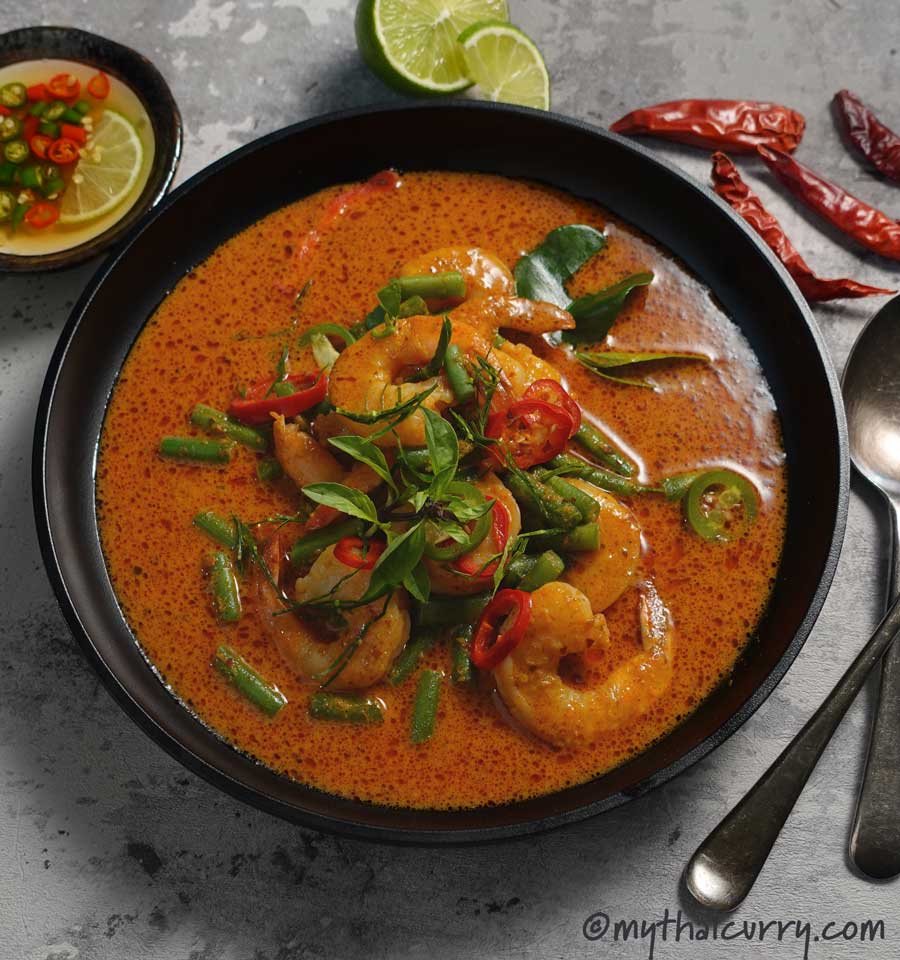
Credit: www.mythaicurry.com
Tips From My Kitchen
- Don’t overcook the fish or prawns. They should just turn opaque. Overcooking makes them rubbery.
- Use full-fat coconut milk. Light versions just don’t give the same creamy mouthfeel.
- Balance the flavors. Penang curry needs sweet, salty, tangy, and creamy. Adjust sugar, fish sauce, and lime to taste.
- Don’t skip the kaffir lime leaves. They’re small, but they bring a big lift.
- Add vegetables you like. I sometimes toss in snap peas or zucchini for extra crunch.
Common Mistakes And How To Avoid Them
The first time I made this curry, I used too much curry paste. It overwhelmed the fish. Start with less, and add more if you like it spicy.
I also once forgot to pat my fish dry after rinsing. Too much water made the sauce thin. Always dry the fish first for the best results.
Another beginner mistake is letting the curry boil hard. Keep it to a gentle simmer. Boiling will break up the fish and make the sauce greasy.
Here’s a quick look at common errors and fixes:
| Mistake | Result | How to Fix |
|---|---|---|
| Too much curry paste | Overly spicy | Add more coconut milk |
| Boiling sauce | Broken, greasy sauce | Keep to gentle simmer |
| Overcooked seafood | Rubbery texture | Cook just until opaque |

Credit: www.recipetineats.com
Serving Suggestions
This curry is always best with fresh, hot jasmine rice. Sometimes, I serve it with a quick cucumber salad for something cool and crunchy.
If you want to make it a party, Thai iced tea is a classic drink pairing. The sweet tea cools your mouth if the curry gets too spicy.
Nutrition And Dietary Notes
I get a lot of questions about how healthy this curry is. It’s actually full of protein from the fish and prawns. The coconut milk adds healthy fat, but it’s rich, so I enjoy it in moderation.
If you’re watching carbs, you can serve the curry with cauliflower rice. For a peanut allergy, leave out the peanut butter—the curry is still great.
According to Wikipedia, Penang curry is often gluten-free, but always check your curry paste ingredients to be sure.
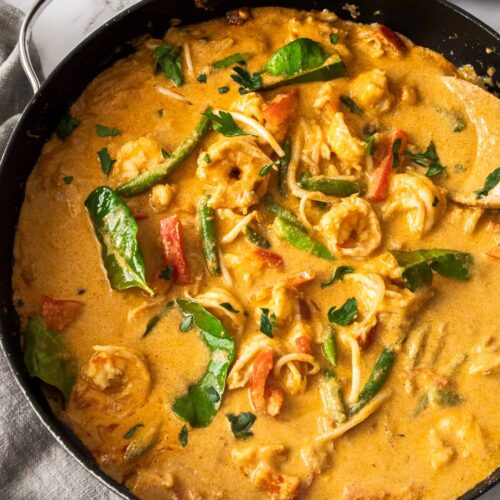
Credit: www.sugarsaltmagic.com
Frequently Asked Questions
How Spicy Is Thai Red Penang Curry?
It’s milder than many Thai curries. The coconut milk tames the heat, making it good for people who don’t want too much spice.
Can I Use Frozen Fish And Prawns?
Yes, but thaw them fully and pat dry. Frozen works well if you can’t get fresh, but the texture is a little softer.
What’s The Best Fish To Use?
Any firm white fish works—cod, snapper, haddock, or even tilapia. Avoid fish that flakes too much, like salmon.
Can I Make This Curry Ahead?
Absolutely. In fact, the flavors deepen overnight. Just reheat gently and don’t boil or the seafood can get tough.
Is Penang Curry Healthy?
It’s high in protein and good fats, but a bit rich. Enjoy it as part of a balanced diet, and use plenty of vegetables.
Cooking this dish was a game-changer for me. It brought Thai food into my kitchen in a real, comforting way. If you’ve never made curry from scratch, try this one. You might just end up loving it as much as I do.