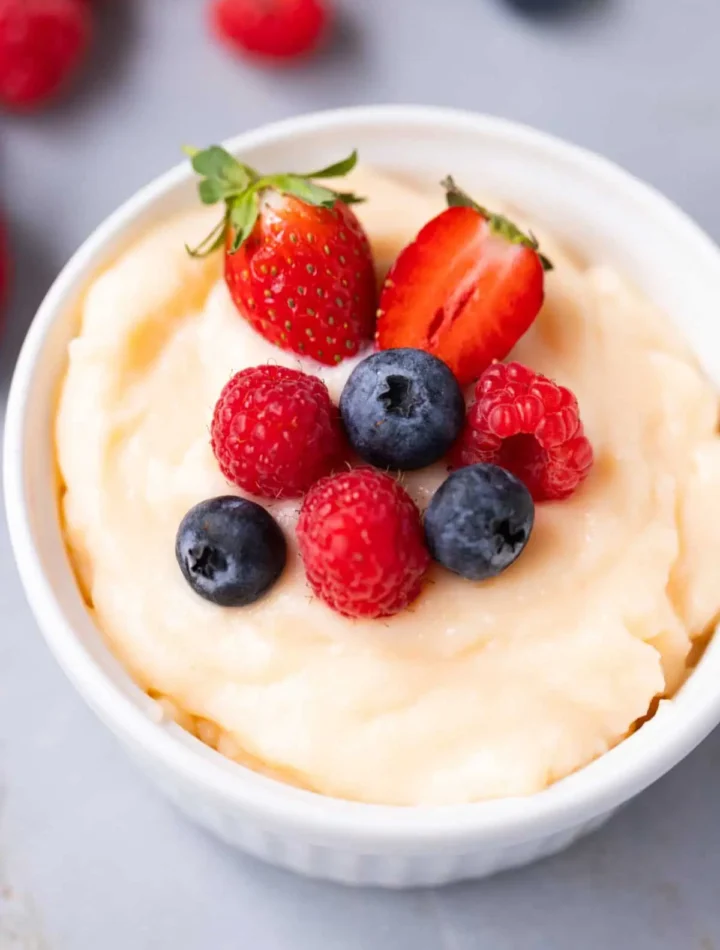
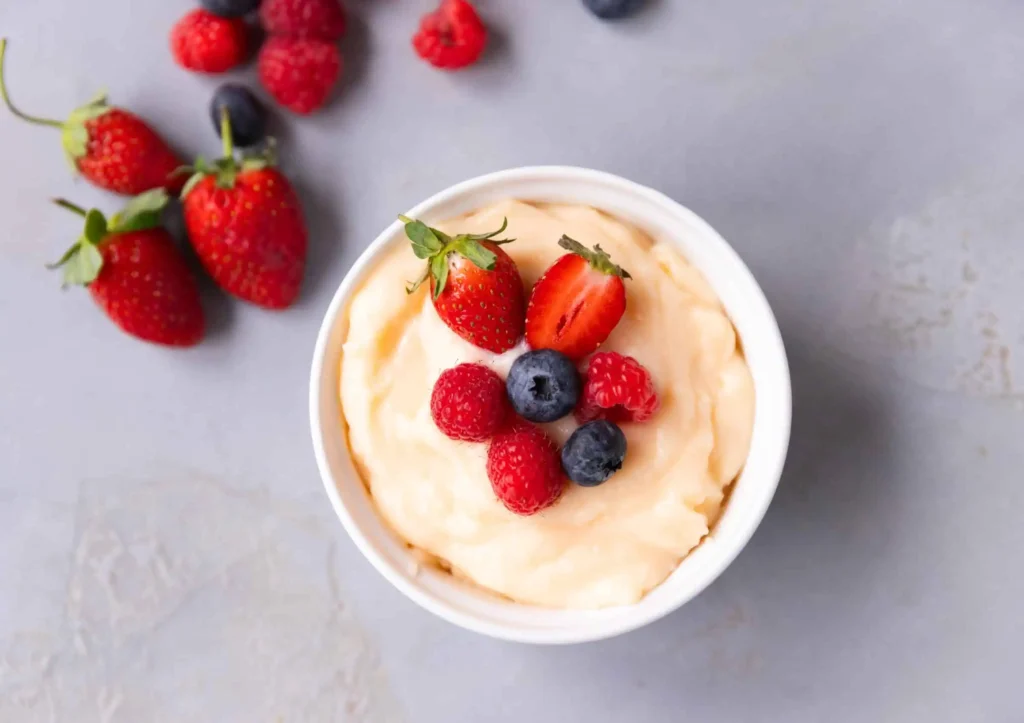
This creamy homemade custard is a classic dessert you can make from scratch in minutes. Smooth, thick, and perfectly sweet, it’s wonderful on its own or as a filling for cakes, pies, and pastries.
Think of it as your all-purpose vanilla pastry cream – a simple base that turns into endless variations, from homemade lemon custard to banana or even ice cream custard.
There’s something so comforting about whisking milk, egg yolks, and vanilla together over gentle heat until the mixture turns silky and golden.
This quick homemade custard is exactly that kind of magic – easy, cozy, and foolproof.
What Is Homemade Custard
- Homemade custard, sometimes called boiled custard or pastry cream, is a mixture of milk, sugar, egg yolks, and cornstarch cooked slowly until thick. It’s the base for many desserts like trifles, éclairs, tarts, and puddings.
- This version doesn’t need a double boiler; it’s cooked right in a saucepan. The result is a smooth, rich homemade vanilla custard that thickens beautifully and holds up for cakes or spoon desserts.
Ingredients for Homemade Custard Recipe
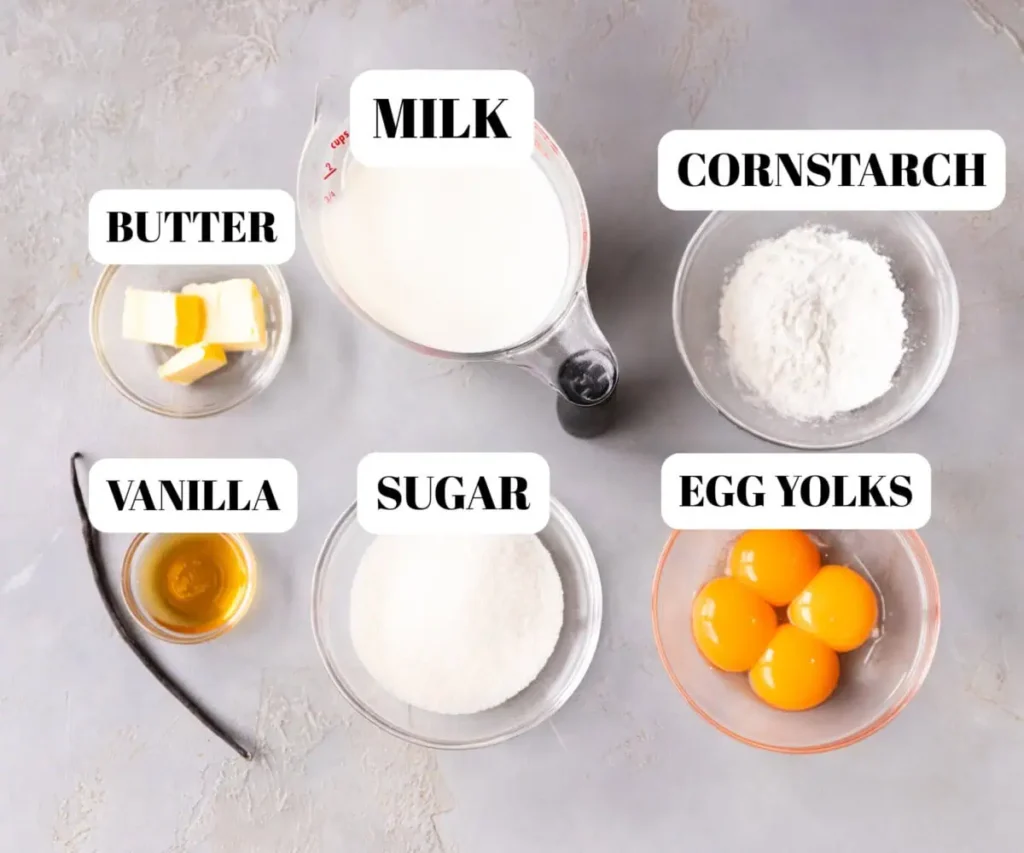
- large egg yolks
- whole milk (you can also use ½ milk, ½ cream for a richer version)
- sugar, divided
- cornstarch (or cornflour)
- vanilla extract or 1 vanilla bean
- unsalted butter, softened
Optional: pinch of salt, lemon zest for lemon custard, or mashed banana for homemade banana custard.
Variations For Egg Yolk Custard Recipe
- Homemade vanilla custard: Use a vanilla bean or pure extract.
- Homemade lemon custard: Add a teaspoon of lemon zest and replace some vanilla with lemon juice.
- Homemade baked custard: Pour into ramekins and bake in a water bath at 325°F until set.
Tips And `troubleshooting
Tips for Success
- Don’t walk away once the custard is cooking. It thickens fast and scorches faster. Keep whisking the entire time.
- Use whole milk. Lower-fat milk makes a thinner custard. For extra richness, replace half the milk with heavy cream.
- Strain through a fine mesh sieve even when it looks smooth — makes the texture noticeably silkier.
- Press plastic wrap directly onto the surface — touching it, not just covering the bowl — to prevent a skin.
- Add butter off the heat while still very hot. Gives a glossy, smooth finish.
Troubleshooting
Custard too thin: Didn’t reach 185°F. Return to medium-low heat and whisk 1–2 more minutes. Don’t rush with high heat.
Custard lumpy or grainy: Heat too high or left without stirring. Strain while warm or blend with an immersion blender.
Skin on top: Plastic wrap wasn’t touching the surface. Press it directly onto the custard, no air gap.
Dairy-free: Oat milk is the closest substitute. Full-fat coconut milk also works.
Why You’ll Love This Homemade Custard
• Thick, creamy texture that’s never watery
• Simple ingredients and ready in under 20 minutes
• Great as a filling for pastries or cakes
• Easy to adapt for lemon, banana, or vanilla flavor
• Naturally gluten-free
How to Serve Custard
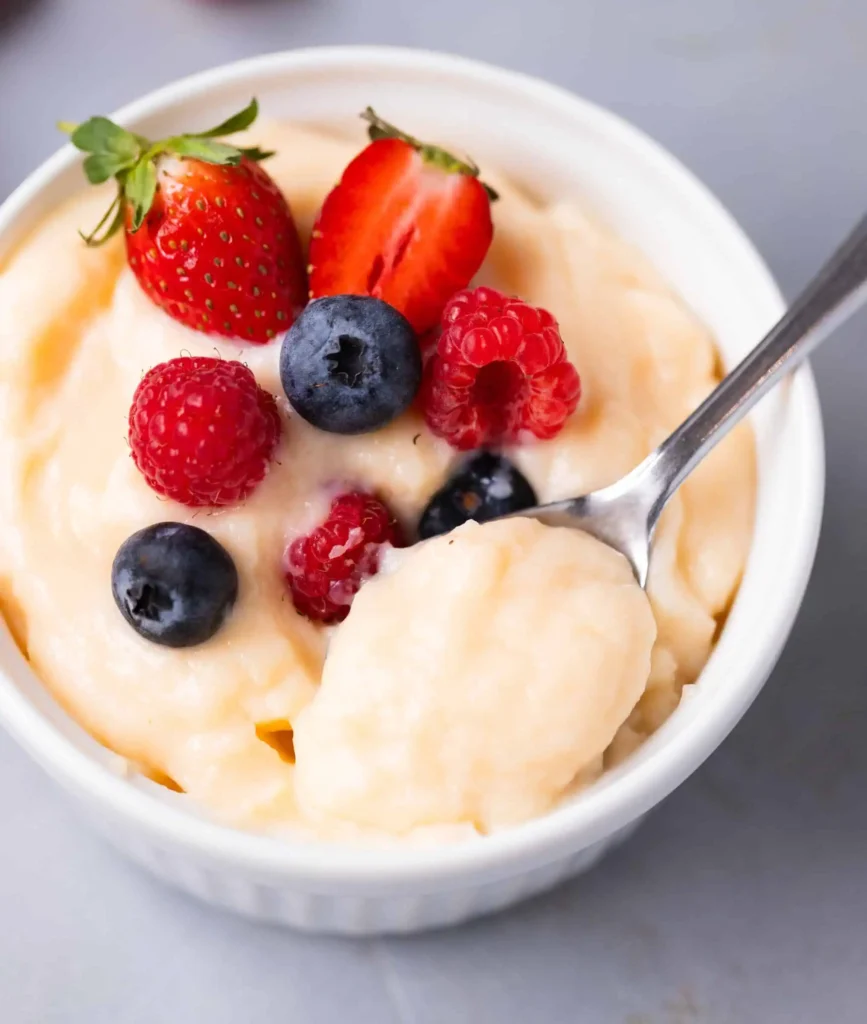
Serve this quick homemade custard with fresh fruit, inside cream puffs, between cake layers, or chilled in small cups with berries. It’s also the perfect base for banana pudding, trifles, and other classic desserts.
FAQ About Homemade Custard
What’s the difference between homemade custard and pastry cream?
They refer to the same thing. Pastry cream is the professional French term (crème pâtissière), while custard is the familiar home-cooking name. A thin pouring custard like crème anglaise is different — much less starch, stays pourable rather than thick and pipeable.
Can I use whole eggs instead of just yolks?
You can, but the result will be lighter in color, less rich, and slightly less silky. Egg yolks give custard its golden color and creamy body. If substituting, use 2 whole eggs in place of 4 yolks.
What milk works best for custard?
Whole milk gives the best texture. 2% works but makes a slightly thinner custard. For extra richness, replace up to half the milk with heavy cream. For dairy-free, oat milk is the closest substitute.