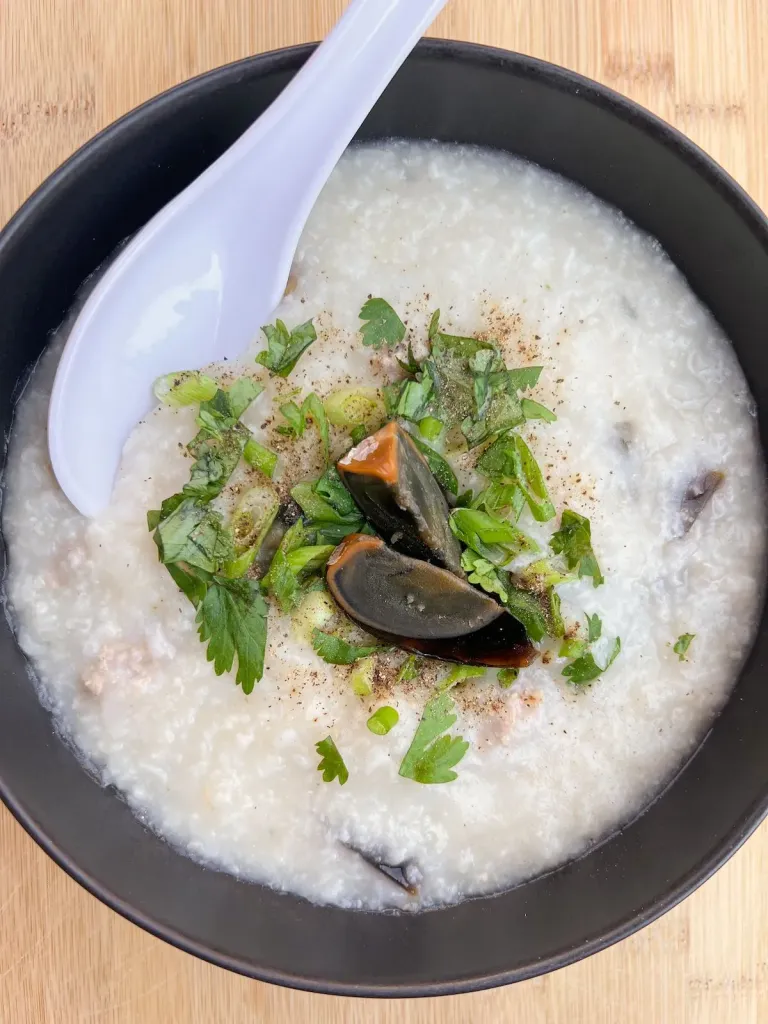
It’s the perfect mix of bold, creamy, and savory flavors. Every spoonful is full of rich umami taste. The slow-cooked pork blends with the special flavor of the thousand-year-old egg. It makes a bowl you can enjoy at breakfast, lunch, or dinner. I first had this dish in a small family restaurant in Hong Kong. Even now, when I make it at home, it still feels just as comforting.
This dish is made from scratch, but it’s simpler than it looks. The key is to let white rice simmer in water until soft. Then fold in chunks of century egg so the flavors blend together. My own trick is using a stovetop method. It cuts the time to only 30–40 minutes. You still get a deep and slow-cooked flavor. This balance of speed and taste makes it better than many versions I’ve had at dim sum restaurants.
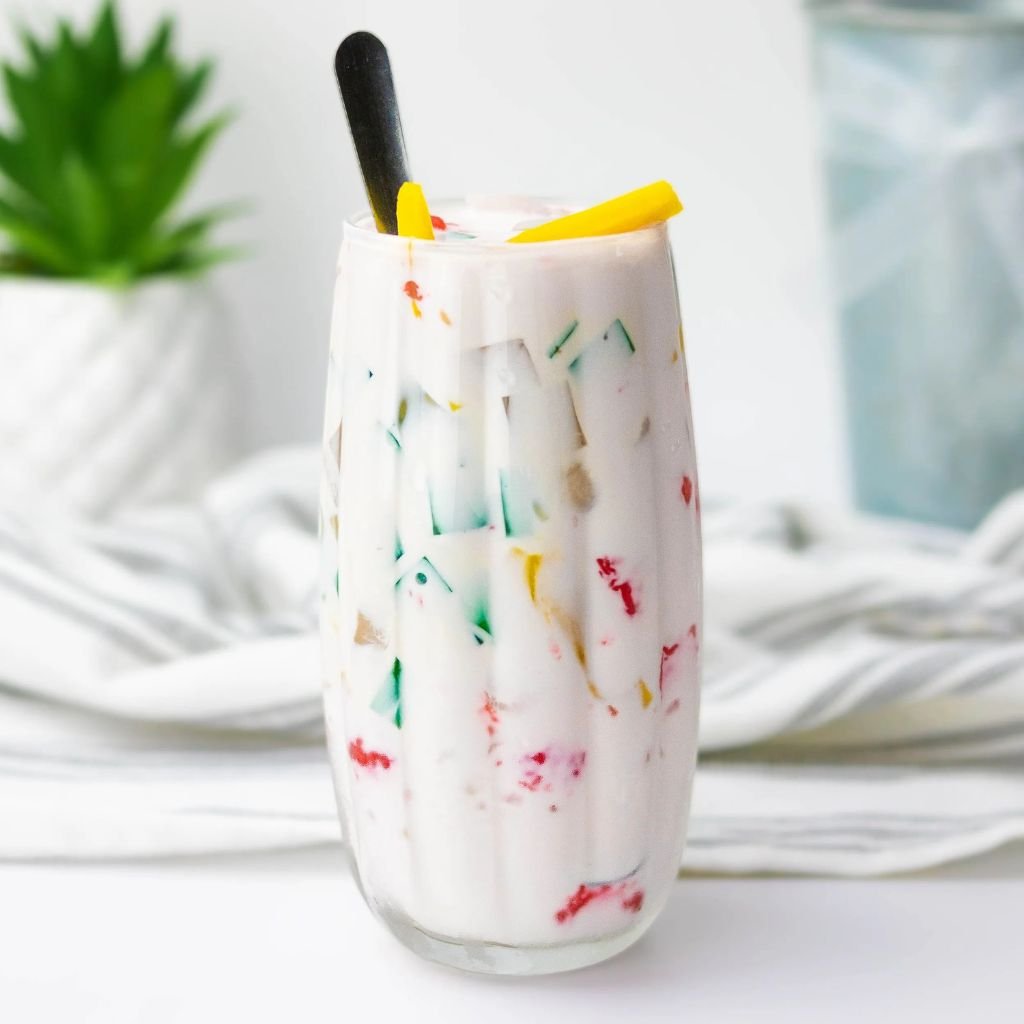
I like to serve it with crispy fried dough, scallion pancakes, or light vegetables. It brings the same warm feeling as a classic Wonton Soup Recipe, but still has its own charm. For variety, you can end the meal with a cool Vietnamese Fruit Dessert. It balances the rich taste in a fresh way.
This dish also goes well with bold starters like Vietnamese Chạo Tôm (Sugarcane Shrimp). Together, you get layers of flavor and texture in one meal. You can also add a salad with Teriyaki Salad Dressing. It gives a bright and light contrast.
No matter if you cook for family or only yourself, this bowl always feels right. It is easy to adapt, rich in taste, and full of history. I return to it again and again because it never fails to bring comfort.
❤️More Recipes You'll Love : How to make Bánh Mì Nachos
✅ Quick Tips: Read the recipe all the way through before you cook. This helps you see the food list, the steps, and the time you need. It also gives you a chance to get tools and food ready ahead of time.
What is a Century Egg?
A century egg is a well-known delicacy in Asian cooking. It is made by preserving eggs—duck, chicken, or quail—in clay, ash, salt, and tea for weeks or months.
In Vietnamese, it is called bắc thảo, and though people call it a thousand-year-old egg, it comes from China. You can find it in stores like 99 Ranch Market or H Mart. The long process gives the egg a bold taste that shines in dishes like congee.
When I first tried it in congee, I made small changes to balance the flavors. Its rich, umami taste blends well with the smooth texture of soft rice. Paired with tender pork, the egg adds depth and comfort. That one change turns a simple bowl of congee into a dish full of history, flavor, and character.
❤️More Recipes You'll Love : Vietnamese Winter Melon Soup (Canh Bí Sườn)
Recipe tips
Here are some proven, hands-on tips that’ll help your Century Egg Congee turn out perfectly every time:
Soak the rice
Soaking the rice is more than a step—it’s the secret to faster cooking and a smooth bowl. In my own kitchen, soaking overnight gives the best, silky result. Even a short soak in the morning makes a big difference.
If you are in a rush, pulse the rice in a blender for a few seconds. It cracks the grains just enough to cut down cooking time without losing the creamy texture.
This step also helps release starch, which gives Century Egg Congee that velvety, comforting base.
Simmer on medium-low heat
Keep the pot at medium-low for a steady simmer. I’ve learned the hard way that high heat can cause bubbling, burning, or uneven thickening.
Gentle heat breaks the rice down slowly and evenly. The result is a creamy porridge without burnt spots.
This is extra important for Century Egg Congee, since the eggs should stay soft and not get overcooked.
Add pork slices carefully
Add the pork slices slowly and stir right away. This stops the meat from clumping.
Stirring quickly helps the pork cook evenly and stay tender while soaking in the flavor of the broth and rice.
From my experience, this step keeps the pork melt-in-your-mouth and makes the whole congee balanced.
Stir strategically for texture
Stirring changes the congee texture. The more you stir, the thicker it gets as rice starch is released.
Stir gently for balance. Too much stirring can make it heavy and pasty instead of smooth.
This matters most with Century Egg Congee, where the creamy base should hold the soft, savory eggs without being too dense.
❤️More Recipes You'll Love : Vietnamese Macaroni Soup (Súp Nui)
Century Egg Taste & Appearance
Century eggs are a unique food. They are loved for their taste and look. The amber and black egg whites have a jelly-like, firm texture. Peeling them feels as satisfying as peeling a soft-boiled or hard-boiled egg. Inside, the grayish-green yolks are creamy, buttery, and rich. They have an earthy flavor with a small touch of saltiness. The smell can be strong—like ammonia or blue cheese. That’s why many people need time to get used to them.
I love the metallic tang and smooth texture of century eggs. They taste amazing when added to congee. In my experience, century eggs and congee make a perfect pair. When I make Cháo Trứng Bách Thảo, the dish balances bold flavors and warm comfort. The century eggs bring out a special taste and add a rich layer to the congee. It makes the dish feel extra special.
When added to any dish, century eggs bring a unique flavor. Their creamy texture can make even simple meals feel extraordinary.
❤️More Recipes You'll Love : Tomato Egg Soup (Canh Cà Chua Trứng)
Century Egg Congee Ingredients
To make the perfect Century Egg Congee Recipe for your daily dish, you I'll need a mix of carefully selected ingredients that work together to create a comforting dish. Each ingredient plays a special role, so here’s a breakdown of what you’ll need:
- Rice: Choose white rice, whether long, medium, or short-grain. Personally, I love using jasmine rice. It gives the congee that velvety texture, making each spoonful smooth and satisfying.
- Century Eggs: These eggs add a bold, unique flavor to the dish. You only need half an egg per serving, chopped into small pieces. It’s the perfect amount to give the congee that signature taste.
- Water: The key to the perfect texture is the right balance of rice to water. I’ve found that a 1:8 ratio (rice to water) works best. This ensures the congee has that creamy, soup-like consistency.
- Ginger: Fresh ginger brings warmth and spice. It also adds a nice health boost, helping with digestion. The slight heat it provides complements the richness of the congee.
- Chicken Bouillon: For an extra umami kick, I use chicken bouillon. It's a great alternative to MSG, and I always go for Knorr bouillon because it gives the congee that deep, savory flavor.
- Salt: A pinch of salt brings out the natural flavors, balancing the dish’s overall neutrality. Be careful not to overdo it—just enough to enhance the taste.
- Pork: Ground pork, shaped into tender meatballs or just added in small chunks, gives the congee a hearty texture. I’ve always enjoyed adding pork because it makes the dish feel more complete and satisfying.
- Black Pepper: A dash of freshly cracked black pepper is the finishing touch. It adds a mild layer of warmth and spice to round out the flavors.
When you combine these ingredients, you'll have a congee that’s not just flavorful, but deeply satisfying. The texture and taste come together perfectly, offering a comforting dish that’s hard to resist. I can honestly say, every time I make this, it feels like a warm hug in a bowl.
Century Egg Congee Toppings
To take your Century Egg Congee to the next level, the right toppings really matter. These simple yet thoughtful additions don’t just add flavor—they also make the dish look more inviting and balanced:
- Century Egg: Even though chunks of century egg are already stirred into the congee, I like to add a few thin slices on top. It gives the dish a finished look and adds another layer of that bold, savory taste.
- Green Onions: A small handful of sliced green onions gives a light onion flavor and a nice crunch. For me, this simple topping always adds a fresh lift that cuts through the richness of the congee.
- Cilantro: If you like a herby, bright contrast, chopped cilantro is a must. I usually add it right before serving—it freshens the bowl and balances the deep flavor of the century egg beautifully.
- Black Pepper: A light sprinkle of black pepper at the end gives just the right bit of warmth and subtle spice. I always keep this for last, right before the first spoonful.
These toppings might seem small, but together, they turn a basic bowl into something layered and deeply comforting. Every time I’ve added them, even friends new to Century Egg Congee ended up loving the extra burst of flavor and texture.
How to Make Century Egg Congee
Step 1: Create the Pork Mixture
Let’s start with the pork! In a bowl, mix ground pork with chicken bouillon and black pepper, ensuring the seasonings are evenly combined. This step is crucial because it enhances the pork with a rich, umami depth that seeps into the congee as it cooks.
I remember the first time I made this dish—I didn’t mix the seasoning well enough, and some bites lacked flavor while others were too salty. Lesson learned! Now, I always take my time to combine everything properly. Set the mixture aside while we prepare the base.
Step 2: How to Make Congee
Now, onto the heart of the dish—the congee. In a pot over medium heat, add rice, water, ginger, chicken bouillon, and salt. Bring it to a boil and let it cook uncovered for about 20 minutes. This step is key to achieving that smooth, velvety consistency congee is known for. One pro tip: stir occasionally to prevent the rice from sticking to the bottom.
When I first started making congee, I thought it was difficult to get the texture just right. But after a few tries, I realized that patience and occasional stirring make all the difference.
Step 3: Add Pork & Century Egg
Here’s where the flavors come together! Take small spoonfuls of the seasoned pork mixture and gently drop them into the simmering congee. You can shape them into tender meatballs or leave them as smaller chunks—it’s all about personal preference. Once the pork is in, add the century egg pieces and let everything simmer.
The century egg’s creamy texture and deep umami flavor blend beautifully with the congee. I used to be unsure about century egg, but once I tried it in this dish, I was amazed by how well it complemented the other ingredients.
Step 4: Adjust to Your Liking
Let the congee simmer for another 10 minutes, allowing the flavors to fully develop. If it feels too thick, add a bit more water; if it’s too thin, let it cook a little longer. Taste and adjust the seasoning as needed.
The balance of the rich pork, silky congee, and creamy century egg creates a dish that is both comforting and packed with depth. Once you get the consistency just right, you’ll understand why this dish is a beloved staple in so many households.
With these steps, you’ll have a warm, hearty bowl of Century Egg Congee that’s perfect for any occasion. Give it a try—I’d love to hear how yours turns out! 🍲
❤️More Recipes You'll Love : Rice Pudding with Black Eyed Peas (Chè Đậu Trắng )
Leftovers & Storage
Keeping your Century Egg Congee fresh is easy and helps reduce food waste. You can safely store it for 3 to 4 days in the fridge. Just transfer any extra congee into a sealed, airtight container to lock in the flavor and keep it from drying out.
When you're ready to enjoy it again, you’ve got two reheating options. One is using a pot on the stove over low heat, which I prefer because it gives you more control. The other is quicker—just heat it in the microwave.
Now here’s something to expect: as it sits, the rice in the congee will soak up more liquid. Also, some moisture evaporates while reheating. So the texture might feel thicker than when it was freshly cooked. I’ve run into this plenty of times, and my go-to fix is simple—just stir in a bit of warm water until it loosens up to the consistency you like. This small tip makes a big difference, especially if you're storing a large batch. It keeps the congee smooth, creamy, and just as comforting as when you first made it.
More Recipes You Might Like