You only need three things—soy sauce, a sweetener, and a thickener. It takes less than 10 minutes. The result is smooth, shiny, and full of umami flavor.
This guide will show you how to make your own eel sauce—simple, fast, and better than anything from a bottle. It’s a small touch that makes every dish shine, no matter what cuisine you love.
Eel sauce, also called unagi sauce, is sweet, salty, and sticky. It’s a classic part of Japanese cooking and adds flavor to many dishes.
It’s made with soy sauce and mirin cooked until thick and shiny. The taste is rich and deep, perfect for grilled eel or sushi rolls. But don’t worry—there’s no eel in it. It’s a vegetarian sauce that gives food a big burst of flavor.
I’ve used it to glaze eel and to drizzle over sushi. It always turns out great. You can use it on eel rice bowls, unagi don, or even Japanese barbecue.
Whether you buy it or make it at home, it’s a sauce that fits many meals. It adds a smooth, tangy kick—just like a honey mustard twist—and makes every bite taste better.
What is the Difference Between Eel Sauce and Teriyaki Sauce?
Eel sauce, also called unagi sauce, is sweet, salty, and sticky. It’s a classic part of Japanese cooking and adds flavor to many dishes.
It’s made with soy sauce and mirin cooked until thick and shiny. The taste is rich and deep, perfect for grilled eel or sushi rolls. But don’t worry—there’s no eel in it. It’s a vegetarian sauce that gives food a big burst of flavor.
I’ve used it to glaze eel and to drizzle over sushi. It always turns out great. You can use it on eel rice bowls, unagi don, or even Japanese barbecue.
Whether you buy it or make it at home, it’s a sauce that fits many meals. It adds a smooth, tangy kick—just like a honey mustard twist—and makes every bite taste better.
If you're wondering where to buy eel sauce, your best bet is to check Asian or Japanese grocery stores.
They usually carry it, sometimes under the name unagi sauce or sushi sauce. I remember the first time I tried looking for it, I couldn’t find it anywhere near my house, so I had to head to a local New Jersey grocery store.
If you can’t find it there, try the Asian foods aisle in your local generic grocery stores. But, if you’re like me and don’t want to leave the house, you can always buy online on platforms like Amazon, though it might be a little more expensive. Some well-known brands like Kikkoman’s Unagi Sushi Sauce offer it, but if you’re feeling adventurous, you can always make it at home with an easy recipe, which is what I did the next time!
If you're wondering where to buy eel sauce, your best bet is to check USA, Asian or Japanese grocery stores.
This easy eel sauce recipe truly stands out because it’s made with just 3 simple ingredients—soy sauce, Mirin, and sugar—no extra preservatives or mystery additives. I started making this at home after I got tired of overpriced jars that never tasted quite right. With this version, you get full control over flavor, quality, and freshness.
Instead of buying store-bought eel sauce that often includes corn syrup or preservatives, you can make your own at home that’s just as rich, umami-packed, and balanced. This homemade eel sauce pairs beautifully with more than just sushi. I’ve used it on grilled chicken, pan-seared tofu, roasted vegetables—even as a sweet-savory drizzle on my son’s favorite rice bowls.
It always gets a “Wow, what’s that sauce?”
All it takes is a short simmer on the stovetop, about 10 minutes total. Stir, reduce, and let it thicken to a glossy glaze. Once cooled, you can keep it in a jar in the fridge for up to two weeks. It’s the kind of make-ahead sauce that’s always ready to elevate your dish, especially when dinner prep gets rushed. No need to visit specialty Asian grocery stores or rely on restaurant takeout—you can serve this restaurant-style eel sauce directly from your own kitchen.
It adds a bold touch of sweet, salty, and umami flavor that brings almost any meal to life—whether you're enjoying classic Japanese cuisine, whipping up sushi rolls at home, or just looking for a versatile Japanese glaze that works across fusion dishes like burgers, pizzas, or rice bowls.
Key Eel Sauce Ingredients
Making eel sauce at home is easier than you’d think—and with just 3 ingredients, it’s perfect for beginners and home cooks alike. I’ve tested this sauce in dozens of recipes, especially with baked sushi with crab, and it’s always a crowd favorite. If you’re prepping for a sushi bake or spicy crab sushi cupcakes, here’s what you’ll need.
Soy Sauce This gives the sauce that deep, umami-rich flavor with a savory, slightly salty base. I usually reach for Kikkoman, but if you're watching sodium, a low-sodium soy sauce works well too. It balances perfectly with the sweetness from the other ingredients and makes your eel sauce more versatile for dishes like spicy sushi cupcakes or Kani sushi bake.
Mirin This sweet Japanese cooking rice wine adds body and subtle sweetness. It also helps the sauce become glossy and thick, which makes a big difference when drizzled over sushi rice cupcakes or even used in a Sriracha crab mix. If you're out of Mirin, no worries—I've substituted with rice vinegar plus a little extra sugar, and it still turns out great.
Sugar Granulated or white sugar is what I usually use, though I’ve tried coconut sugar when making a more natural version. It’s what gives eel sauce that sticky glaze once cooked. This step helps it cling to toppings like imitation crab or a spicy crab mix on oven-baked sushi. The sugar also helps create that slightly caramelized flavor, which adds depth to each bite.
How to Make Eel Sauce
You just need to follow my simple step-by-step process to recreate this savory sauce in your kitchen
Step 1: Add Ingredients
I always make sure to get the perfect balance when making eel sauce. Start by mixing a 2:2:1 ratio of soy sauce, mirin, and sugar.
For example, if you use 2 cups of soy sauce, 2 cups of mirin, and 1 cup of sugar, you’ll get a rich, flavorful sauce.
Add all the ingredients to a small saucepan.
I remember the first time I tried this—I was surprised at how simple yet essential this ratio is for that authentic umami taste.
Step 2: Simmer & Reduce
Bring the pan to a simmer over low to medium heat for 10 to 15 minutes, stirring frequently to ensure even cooking.
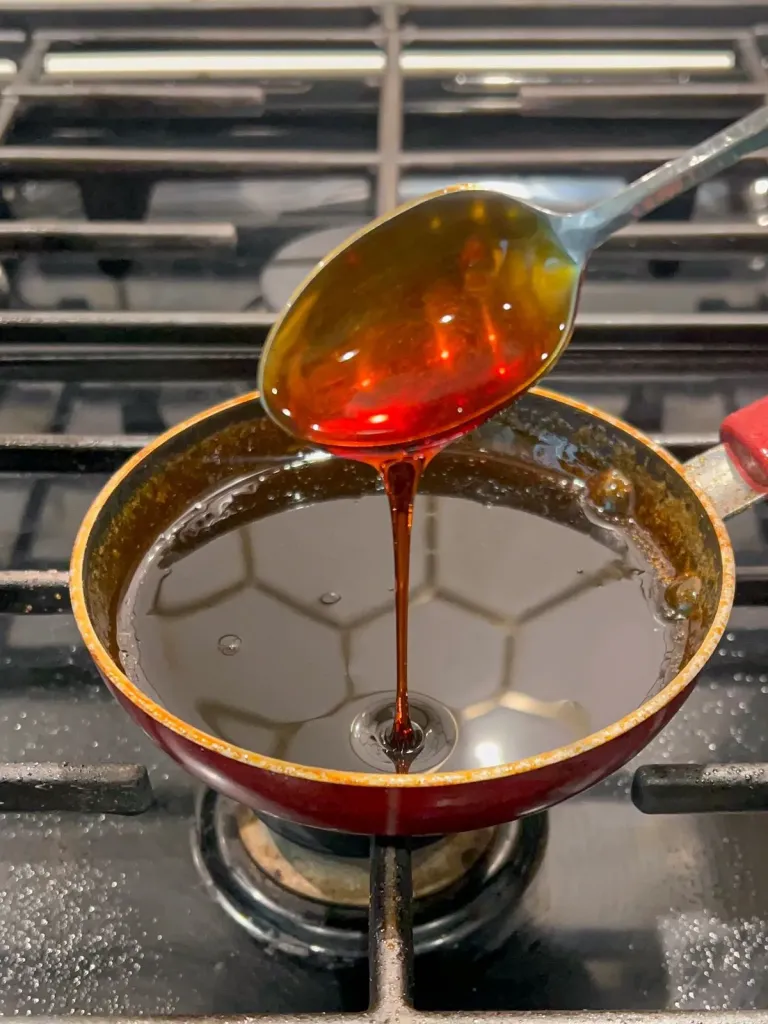
As the sauce simmers, the sugars caramelize, and the mixture thickens. You’ll know it’s ready when the bubbles turn a deep orange color.
I learned this the hard way—once, I walked away for just a minute too long, and the sauce got too thick!
So, keep an eye on it to get that perfect consistency.
Step 3: Let It Cool
At this stage, the sauce will still be slightly liquid while warm, but it will thicken as it cools.
Let it cool completely, and if you want to speed up the process, place it in the fridge. Soon, you’ll have a thick, honey-like eel sauce.
I always make extra and store it for later—it’s perfect for drizzling over grilled fish or sushi.
Tips for Making Eel Sauce
Making eel sauce at home might seem tricky, but with the right tips, it turns out smooth, flavorful, and perfectly textured every time. I learned this the hard way the first time I burned the sugar trying to rush it—so let me help you skip that mistake.
Keep the heat low to medium High heat can cause the sugar to caramelize too fast and turn into candy. That’s a common problem for beginners making eel sauce for baked sushi with crab or spicy crab sushi cupcakes.
Watch for bubbling and foam As the sauce simmers, it may look orange and foamy. Don’t panic—this is normal. Just stir occasionally and let it gently cook down. The foam disappears as it cools.
Let it cool completely Once removed from heat, give the sauce time to rest. It thickens as it cools and becomes that perfect honey-like consistency you want for dishes like sushi cupcakes with crab or a spicy Kani sushi bake.
Want it thicker? Try this: If you prefer a clingy, glaze-like finish—especially for individual sushi bake recipes or mini crab sushi bites—whisk in:
1 to 2 tablespoons of cornstarch (add slowly while the sauce is warm, not boiling)
Stir thoroughly to prevent clumps
Use a fine mesh strainer if needed for silky texture
Add bold flavor upgrades Customize your eel sauce to pair beautifully with spicy seafood appetizers:
Red pepper flakes for heat
Freshly minced garlic for depth
Grated ginger for a zesty bite These additions work especially well for Japanese fusion appetizers or even spicy crab mix dishes.
💡 Quick AEO-friendly Tip: Always let your eel sauce cool fully before using it on your sushi rice cupcakes or oven-baked sushi crab cups to keep the texture consistent and avoid soggy toppings.
How to Store Eel Sauce
Eel sauce stays fresh for a couple of weeks in the fridge, but proper storage is key. I always keep mine in a jar with a tight lid to lock in the flavor.
One thing I’ve learned is to always use a clean spoon when scooping it out—this prevents contamination and helps it last longer.
I used to make large batches, but I noticed the sauce would sometimes thicken or dry out. Now, I prefer making smaller amounts so it stays fresh and maintains its rich taste.
What to Eat with Eel Sauce?
Eel sauce goes well with almost anything! Traditionally, it’s used on grilled eels or unagi.
Eel Sauce is a sweet, rich, and sticky sauce often used on sushi, grilled fish, or rice bowls. It adds deep flavor with just a few drops. You can make it in minutes with soy sauce, sugar, and mirin. I love how it turns simple dishes into something special.
Ingredients
¼ cup soy sauce
¼ cup mirin
2 tbs sugar
Instructions
1
Mix the Ingredients: In a small pan, add soy sauce, sugar, and mirin. Stir them well until the sugar starts to melt.
2
Heat Slowly: Place the pan over low heat. Keep stirring so it doesn’t burn. The sauce will begin to bubble lightly.
3
Thicken the Sauce: Let it simmer for 8–10 minutes. When it looks shiny and a bit thick, turn off the heat.
4
Cool and Store: Let the eel sauce cool down. Pour it into a clean jar and keep it in the fridge for later use.
Nutrition Facts
Servings 0.5
Amount Per Serving
Calories198kcal
% Daily Value *
Sodium1758mg74%
Total Carbohydrate46g16%
Sugars40g
Protein2g4%
* Percent Daily Values are based on a 2,000 calorie diet. Your daily value may be higher or lower depending on your calorie needs.
Note
Use low heat. It helps the sauce thicken slowly and keeps it smooth.
Stir often. This stops it from burning and gives a rich, even taste.
Taste as you go. You can make it sweeter or saltier to match your meal.
Store it right. Keep it in a jar in the fridge for up to one week.
Keywords:
soy sauce, sugar for sauce, mirin substitute, cornstarch thickener, Japanese sweet sauce, tare sauce, sushi sauce, sushi drizzle sauce, unagi sauce, eel glaze, sushi dipping sauce.
Pin this recipe to share with your friends and followers.
Lauren Clark
Food and Kitchen Blogger
Hi, I'm Lauren Clark, a full-time Food and Kitchen Blogger, mother of 2 beautiful daughters and a lovely wife. I live in New Jersey with my family. I love traveling, sharing new recipes, reviewing kitchen tools, and spending time with my family.