Make Chinese Hot Pot at Home Like a Pro—No Special Gear Required!
When you think of a relaxing night at home, few things are better than gathering around a hot pot with family and friends. Whether it's summer or winter, this kind of meal brings warmth, joy, and comfort to the table. It’s more than just food—it’s a shared experience where everyone can cook their own meats, seafood, tofu, and veggies, dipping each bite into flavorful, customizable sauces.
I remember the first time I hosted hot pot at home—my mom passed down her spicy broth recipe, and everyone kept going back for more.
From chicken lo mein to egg drop soup and even hot and sour soup, these dishes pair beautifully with hot pot nights. Having these options on the side lets everyone try a little of everything. It’s especially comforting when you’ve had a long day and just want to wind down with warm, satisfying food. I personally love watching thin slices of beef curl up in the broth—it’s small moments like these that make home meals unforgettable.
All you really need are thinly sliced meats, some tofu, and a pot of broth to get started. It’s simple and affordable, which is why I recommend it to anyone looking for an easy, fun dinner that brings people together. Watching your ingredients cook, bite by bite, feels rewarding—and the dipping sauces let you tailor each bite to your taste. That hands-on aspect makes the meal engaging, especially for kids or picky eaters.
If you're looking for a comforting, budget-friendly, and incredibly interactive meal that adds joy to your home, hot pot is it. It’s one of those traditions that sticks with you—and once you start, you’ll find yourself reaching for the pot again and again.
What is Hot Pot?
Hot pot is more than just a meal—it's an experience where everyone gathers around a steaming pot of flavored broth, cooking their own food together. It's something I often enjoy with close friends on chilly weekends; the warmth and conversation just hit differently.
What makes it so special is the interactive, customizable nature. You add your own mix of raw meats, seafood, tofu, and vegetables—each ingredient changes the flavor of the broth over time. Depending on what you choose—Chinese hot pot, Sichuan mala, Japanese shabu-shabu, or Vietnamese-style lẩu—the taste and intensity can shift entirely.
It’s a meal that feels festive but low-pressure. You laugh, you chat, and you eat at your own pace. For birthdays, reunions, or simple get-togethers, hot pot is always my go-to. It lets everyone enjoy something they like, and you don’t have to be a chef to make it work. It’s comforting, collaborative, and surprisingly easy to set up.
Is it really this complicated?
Honestly, it might seem tricky at first, but making hot pot at home is actually super simple—even if you’re new to it. The first time I tried, I was nervous too, but once I picked up the soup mix from a local Asian supermarket, everything just clicked. And hey, if you’re not near one, ordering online works great too.
Once your base is ready, just slice up your favorite proteins, rinse your veggies, and get them ready. That’s really it. You don’t need to overthink it—just follow a guide you trust and enjoy the process. The fun part is in the experience itself, not just the meal. Whether you’re just starting out or already love hot pot, you can absolutely make a delicious, satisfying dinner without the stress.
At Home Hot Pot Set Up
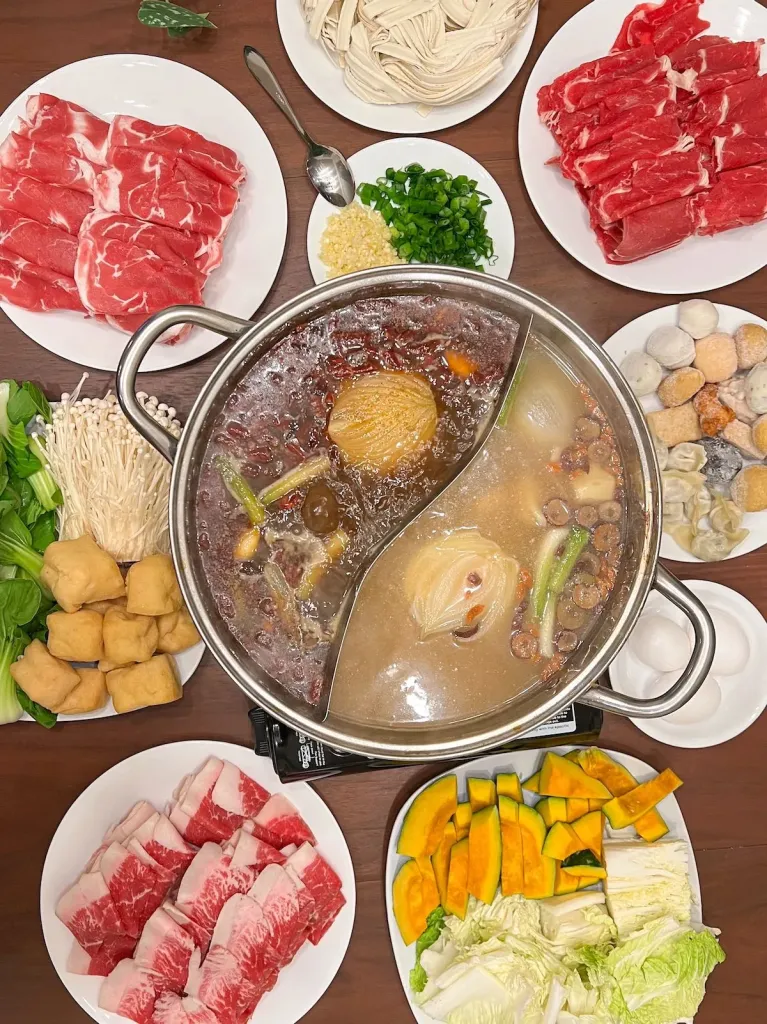
Setting up a hot pot at home is all about creating a fun and interactive dining experience. Start by choosing the right pot—whether it's a regular pot, a split pot for different flavors, or even an Instant Pot for convenience. If you're using a portable stove or gas stove, make sure you have enough space on the dining table for everyone to gather around.
For a smooth setup, you’ll need butane fuel for the stove and an extension cord if your outlet is far from the table. A larger pot, around 4 quarts, will ensure you have plenty of room for the broth and ingredients.
Broths: Haidilao Broth Flavor, chicken broth, Little Sheep Hot Pot Soup Base
Extras: garlic cloves, ginger, yellow onion, green onions, fish balls, fried tofu puffs, corn, mussels, clams
Make sure to have a recipe card to guide you on how to prepare and assemble everything, and save your favorite Pinterest ideas for future meals.
Hot Pot Ingredients
If you want your hot pot night to be unforgettable, the real secret is choosing the right mix of ingredients. I always go for a balance of proteins, veggies, and carbs so everyone at the table has something they love.
The broth? That’s the flavor powerhouse—it’s what makes or breaks the whole meal. Pick one (or a few) that you’re excited about. From my experience, even picky eaters get into it when they can choose their own ingredients. Think about what each person likes, and you’ll make the night super fun and personal.
Veggies
Here’s where you can really play with flavor and texture. I like using bok choy, napa cabbage, and shiitake mushrooms—they soak up the broth and taste amazing. For something a little different, I once tried enoki mushrooms and tong hao, and it gave the soup a nice edge—tong hao adds a slight bitter taste that cuts the richness. Oh, and don’t skip corn—it’s sweet and adds a nice pop.
If you want something heartier, kabocha squash melts beautifully into the broth. These are all common in authentic hot pot restaurants, and now I always add them at home too.
Carbs
You definitely want something filling. I usually go with glass noodles or egg noodles—they soak up every bit of the rich broth. Sometimes I switch it up with handmade noodles or udon, which are chewy and super satisfying.
If I’m keeping it simple, even just a bowl of steamed rice does the trick. It’s all about soaking in that deep flavor, and honestly, carbs help bring everything together in a comforting way. This part always keeps everyone full and happy by the end.
Proteins
This is what most people look forward to. Thinly sliced meats like beef ribeye, lamb shoulder, or even wagyu cook super fast and come out tender. When I host, I always include beef brisket too—it adds that rich, beefy taste that people love.
For something easy, frozen dumplings or wontons are great. And if you're intoseafood, like me, you’ll love adding shrimp, scallops, or even fish balls. Once, I added mussels and clams, and they gave the broth this savory depth I wasn’t expecting—it was a hit!
Broth
This is the base of it all. I usually start with something simple like a chicken broth, and then boost it with ginger, onions, and garlic cloves for more flavor. Some people love using Haidilao Broth Flavor or the Little Sheep Hot Pot Soup Base, which both taste amazing and save time.
If you like heat, try a Sichuan-style spicy broth—it really wakes up your taste buds.
Make sure it’s simmering while you eat so everyone can cook their ingredients right at the table. I learned to keep a few seasonings nearby so people can tweak it to their liking.
Hot Pot Soup Bases
The broth is key to creating that perfect base for your ingredients. You can either make it from scratch or use a store-bought option like Little Sheep Hot Pot Soup Base or Haidilao Broth Flavor, which are available at H Mart, 99 Ranch Market, or even Amazon. These broth options give you the perfect balance of savory and umami, with the hot version adding a nice spice and the non-spicy version offering a milder, flavorful taste.
To enhance the flavor, I like to add a mix of garlic, ginger, and green onions, along with a splash of chicken broth and water to give it depth. The liquid will evaporate during cooking, so be sure to keep extra chicken broth or water on hand to dilute the soup as it reduces, maintaining the right balance of taste. There are endless options when it comes to flavors, from classic Chinese broths to Thai tom yum for something a bit more creative.
Store-Bought Soup Bases
When I’m short on prep time but still want something delicious, I go for store-bought soup bases—they’re fast, reliable, and surprisingly good. My go-to options are always Little Sheep Hot Pot Soup Base or Haidilao Broth Flavor. They’re easy to find at places like H Mart, 99 Ranch Market, or even Amazon if I’m ordering ahead.
These packets are a lifesaver when I don’t feel like simmering bones for hours. You just add water and a few extras, and boom—you've got a rich broth ready for dipping. From spicy to non-spicy, the flavor variety makes it simple to match everyone's preferences at the table.
It’s honestly my favorite hack for throwing together a flavorful hot pot night without compromising that deep, savory taste you’d expect from traditional broths.
Soup Base Enhancers
Even with a great soup base, I like to add a few of my own touches to make it feel more homemade. I usually pour in some chicken broth to give it more richness, then stir in garlic, ginger, and green onions—it makes the whole kitchen smell incredible.
Once during a dinner party, I noticed the broth was reducing faster than expected, so I kept a pot of warm broth on standby. Adding it gradually helped maintain the flavor without making things too salty. The trick is adjusting the salt and spice levels as it simmers, especially when you’re cooking for a crowd.
Having extra broth or water nearby is key to keeping everything smooth and full of flavor until the last bite. This simple habit always ensures the hot pot stays flavorful from start to finish.
Hot Pot Sauces
For a better hot pot experience, the right dipping sauce makes all the difference. I’ve found that the sauces you build at the table can completely change the flavor of each bite. Here’s how I like to mix things up depending on the vibe—or what’s in the fridge.
Ponzu-Based Sauce When I want something bright and tangy, I start with ponzu sauce. I mix in:
A dash of sriracha if I’m craving a punch It’s light, citrusy, and perfect for vegetables or tofu. I first tried this combo during a family gathering and it instantly became a favorite.
Sesame-Based Sauce If I’m in the mood for something creamier and more filling, I go with this mix:
Sesame sauce
Fresh garlic, finely minced
A bit of chopped cilantro It coats meat slices beautifully and has that bold depth I love after a long day.
Raw Yolk Sauce I learned this one while watching a Chinese chef prepare hot pot:
Ponzu sauce
One egg yolk (raw, super fresh)
A splash of soy sauce It sounds simple, but it’s incredibly creamy and adds a unique richness when dipping fish balls or thin-cut beef.
To level things up, I always set out a small sauce bar when friends come over. Just a few bottles and bowls:
At all-you-can-eat hot pot restaurants, you pay a flat price—usually around $35 per person—for access to a big selection of ingredients.
There’s always plenty of meat, seafood, and sometimes even seasonal vegetables or house-made broths. It’s an easy way to try lots of things without prepping anything yourself.
I’ve done this with friends, and it’s super fun—especially when you're hungry and want to sample different broth bases and dipping sauces. But if you start going heavy on items like wagyu or lobster, the cost climbs fast. It's worth it for the convenience, but it’s not the cheapest option if you’re aiming for value.
Hot Pot at Home
Doing hot pot at home takes more time—grocery shopping, slicing the meat, prepping the veggies, and of course, cleanup. But honestly? It’s worth it.
I usually spend around $100 and feed 4–6 people with all the stuff we love—like thinly sliced beef, baby bok choy, and different broths in a divided pot. It’s way cheaper per person, and the best part is we get to pick everything we actually enjoy.
You can slow down, talk, eat, and even play with flavors without worrying about servers or time limits. It becomes a personal experience where everyone joins in and customizes their meal.
A La Carte Hot Pot
With a la carte hot pot, every item is priced by the plate—meats often range from $15 to $30, and it might take a few plates to feel satisfied.
You don’t have to do any prep, which is great if you're short on time. But if you want a full meal with extras like broth and sides, the price adds up quickly.
I remember one visit where I ended up spending over $60 just on the basics—and still wanted more variety. You’ll usually see fewer options compared to all-you-can-eat, and sometimes, even the broth costs extra. It's convenient, but not the most budget-friendly way to enjoy a full hot pot spread.
Hot Pot Expert tips
It's smart to prep your ingredients ahead of time—this step can take anywhere from 30 minutes to 2 hours, depending on your menu. I’ve done solo prep and also cooked with friends, and trust me, having extra hands makes the experience way more enjoyable and organized.
Begin by leaving about 2 inches of space in the pot. This is something I learned the hard way when I overfilled mine once—ingredients need room to move without causing a messy boil-over.
Always make sure to bring the broth to a boil before dropping in any ingredients like mushrooms, lotus root, or raw meat. A bubbling broth ensures even cooking and kills bacteria—something Chinese chefs emphasize for both flavor and food safety.
Keep a pitcher of hot water nearby. If the broth starts to cook down faster than expected, just top it off without losing the soup’s temperature or diluting the flavor too much.
For safety and hygiene, always use separate utensils for raw meat. I usually keep color-coded tongs handy. And remind your guests—don’t double-dip from your personal bowl back into the communal hot pot.
After the meal, I often save leftover ingredients for a quick stir-fry the next day or toss them into Ramen packets with a scoop of the leftover soup. It’s a great way to stretch your prep and avoid waste.
You can always adjust the salt or seasoned broth at the end. Taste changes as ingredients simmer, so I like to finish with a final tweak before serving.
How to set the table for Hot Pot
Setting the table for hot pot is all about creating a space where everyone can enjoy cooking together. Start by placing the pot and burner in the middle of the table.
Arrange your ingredients around the table, making sure there is space for everyone to reach. Set up a sauce station on the counter so people can refill their sauces easily without crowding the table. Be sure to provide dipping bowls for mixing sauces, and consider having a couple per person for extra convenience.
Each setting should have a plate, chopsticks, and a napkin. Include a couple of hot pot strainers and a ladle—one per person is ideal, but you can share if needed. Don’t forget the drinks! If you want an authentic feel, or offer iced green tea, jasmine tea, or even suan mei tang (cold sour plum tea). This setup will ensure everyone has what they need for a fun and delicious meal!
Enjoy Chinese Hot Pot at home like a pro with this simple guide. You’ll learn how to set up, cook, and dip your favorite ingredients. It’s fun, cozy, and easy to make for family or friends. Follow my tips to get that real hot pot taste right in your kitchen.
Pin this recipe to share with your friends and followers.
Lauren Clark
Food and Kitchen Blogger
Hi, I'm Lauren Clark, a full-time Food and Kitchen Blogger, mother of 2 beautiful daughters and a lovely wife. I live in New Jersey with my family. I love traveling, sharing new recipes, reviewing kitchen tools, and spending time with my family.