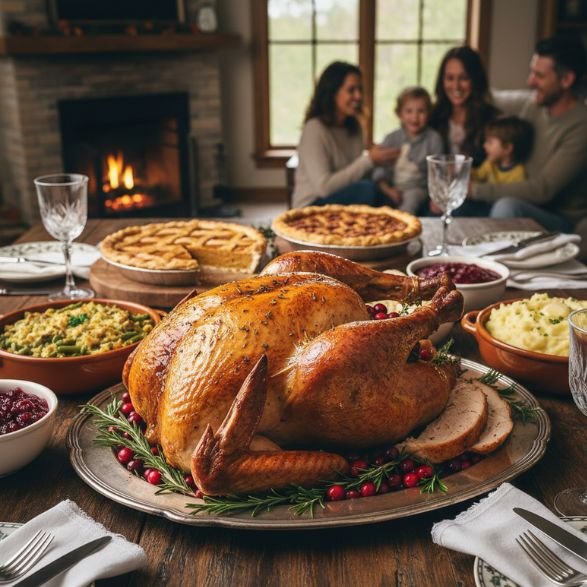
Thanksgiving is all about bringing everyone together around a table filled with love, laughter, and of course, a perfectly roasted turkey. But if you’ve ever felt nervous about cooking the main dish or worried your turkey might come out dry or bland, you’re not alone.
Imagine slicing into a golden, juicy turkey that melts in your mouth and leaves your guests asking for seconds. That’s exactly what you’ll learn to create here. Whether this is your first time roasting a turkey or you want to elevate your traditional recipe, this guide will help you master the perfect roasted turkey for Thanksgiving — easy, foolproof, and full of flavor.
Ready to impress your family and make this holiday truly unforgettable? Let’s get started!
Choosing The Right Turkey
Choosing the right turkey is key for a delicious Thanksgiving meal. Fresh turkeys often have a better texture and taste but can be more expensive. Frozen turkeys are convenient and last longer, though they need proper thawing before cooking.
Size is important. A turkey of 12 to 16 pounds usually serves a family well. Bigger birds need more cooking time and may dry out easily.
Organic and heritage turkeys offer richer flavor and are raised without chemicals. They may cost more but many find the taste worth it. Heritage turkeys are often smaller and have firmer meat.
Prepping The Bird
Thaw the turkey in the refrigerator for several days. Allow about 24 hours of thawing for every 4-5 pounds. Avoid thawing at room temperature to prevent bacteria growth.
Remove the turkey from its packaging carefully. Rinse it inside and out with cold water. Pat the bird dry with paper towels to ensure crisp skin during roasting.
Check inside the cavity for the giblets and neck. These often come in a small bag. Remove and save them for making stock or gravy.
Flavor Boosters
Brining makes turkey juicy and flavorful. Soak the bird in a saltwater mix for 12-24 hours. This helps the meat hold moisture during cooking. Add sugar, herbs, and spices to the brine for extra taste.
Using fresh herbs and aromatics like rosemary, thyme, and garlic inside the cavity adds nice flavors. Stuff the turkey with onion, lemon, and celery for a fresh aroma. These ingredients seep into the meat while roasting.
Butter and oil rubs help to get crispy, golden skin. Mix softened butter with herbs, garlic, salt, and pepper. Rub this mixture all over the turkey, under the skin, and on top. Use oil if you want a lighter coating.
Stuffing And Aromatics
Stuffing the turkey cavity with aromatics like onions, garlic, and fresh herbs adds a rich, savory flavor. Citrus fruits such as lemon or orange slices can give a bright, fresh taste inside the bird. Use fresh sage, rosemary, or thyme for a classic Thanksgiving aroma.
Avoid overstuffing the cavity to ensure even cooking. Too much stuffing can keep the bird undercooked inside. Leave space for air to circulate. This helps the turkey cook safely and evenly.
| Inside the Cavity | External Flavors | Avoiding Overstuffing |
|---|---|---|
| Onions, garlic, lemon slices | Butter, herbs, olive oil rub | Do not fill too tightly |
| Fresh sage, rosemary, thyme | Salt and pepper seasoning | Leave space for heat |
| Citrus fruits for brightness | Brush with melted butter | Use loose stuffing only |
Roasting Essentials
Set the oven temperature to 325°F to 350°F for even cooking. Higher heat can dry out the turkey. Use a heavy-duty roasting pan to catch drippings and hold the bird securely. A pan with a rack helps air circulate underneath for crisp skin.
Tenting the turkey with foil keeps it moist but may prevent browning. Remove the foil in the last 30 minutes to get a golden, crispy skin. For smaller turkeys, foil might not be needed at all. Watch the turkey and adjust as you go.
Cooking Time Guide
The cooking time depends on the weight of your turkey. For every pound, roast it about 13 to 15 minutes at 325°F (163°C). A 12-pound turkey needs roughly 3 to 3.5 hours, while a 20-pound one takes 4.5 to 5 hours. Using a meat thermometer is the best way to check doneness. The internal temperature should reach 165°F (74°C) in the thickest part of the thigh without touching the bone.
Let the turkey rest for at least 20 minutes before carving. Resting helps the juices redistribute, making the meat juicy and tender. Cover the bird loosely with foil while resting to keep it warm. This step is very important for a perfect roast.
Achieving Crispy Skin
Dry brining means rubbing salt on the turkey skin and inside the bird. This helps pull out moisture and then reabsorbs it, making the skin drier and the meat juicier. It also helps the skin get crispy when roasted.
Basting keeps the turkey moist. Use melted butter or pan juices and brush the skin every 20-30 minutes. This adds flavor and helps the skin turn golden brown. But avoid opening the oven too often to keep heat steady.
Start roasting at a lower temperature, then finish with high heat for 15-20 minutes. This step crisps the skin perfectly without drying out the meat. Watch closely to prevent burning.
Gravy And Sides
Use the pan drippings to make rich, flavorful gravy. After roasting, pour the drippings into a saucepan. Add some flour or cornstarch to thicken. Stir constantly to avoid lumps. Pour in broth or water for the right consistency. Season with salt, pepper, and herbs like thyme or sage for extra taste.
Flavor enhancers like garlic, onions, or a splash of white wine can boost your gravy’s taste. A little butter added at the end makes it smooth and shiny. Taste as you go to balance flavors well.
| Classic Side | Description |
|---|---|
| Mashed Potatoes | Soft and creamy, perfect to soak up gravy. |
| Green Beans | Lightly steamed with garlic or almonds. |
| Cranberry Sauce | Sweet and tart, a fresh contrast to turkey. |
| Stuffing | Herb-filled and moist, often cooked inside the bird. |
Common Mistakes To Avoid
Overcooking a turkey makes it dry and tough. Use a meat thermometer to check the temperature. The turkey is done at 165°F (74°C). Avoid cooking it too long to keep the meat juicy.
Underseasoning can make the turkey bland. Use enough salt, pepper, and herbs inside and outside the bird. This adds flavor and makes the turkey tasty.
Skipping rest time loses the turkey’s juices. Let the turkey rest for at least 20 to 30 minutes after roasting. This step keeps the meat moist and tender when carved.
Tips From Top Chefs
Ina Garten seasons the turkey cavity with salt, pepper, thyme, lemon, and onion. She roasts it in a large pan for even cooking. Basting is done occasionally to keep the skin golden and crisp.
The Pioneer Woman uses whole oranges, butter, fresh rosemary, and black pepper. She rubs butter under the skin to keep the meat moist and flavorful. The orange adds a fresh, zesty aroma to the turkey.
Bon Appétit focuses on a simple, no-fuss method. Their trick is to pour homemade turkey broth into the roasting pan. This keeps the turkey juicy while roasting and adds extra flavor.
Conclusion
Perfect roasted turkey makes Thanksgiving truly special. Follow simple steps for juicy, tender meat. Use fresh herbs and citrus for great flavor. Keep the skin crispy and golden brown. Allow time for proper cooking and resting. Serve with your favorite sides and enjoy.
This turkey will bring joy to your holiday table. Happy Thanksgiving and happy cooking!

