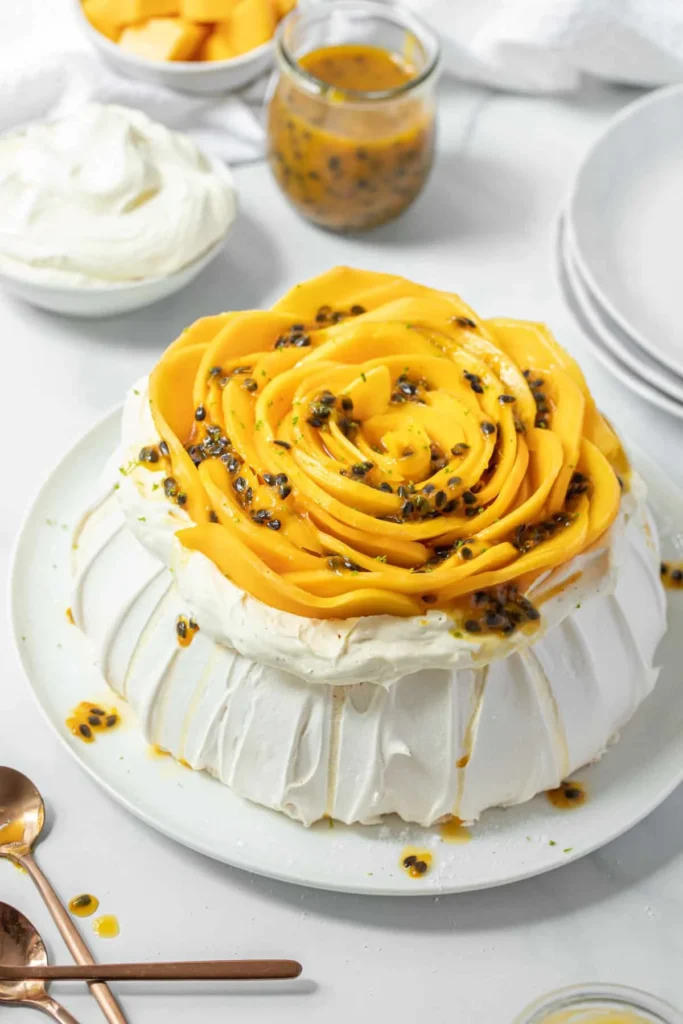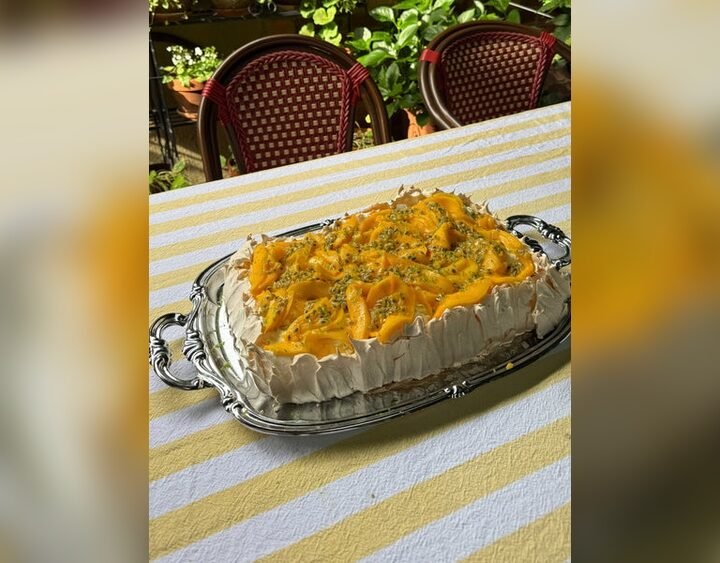
When I first made a slab Pavlova with mango, passionfruit, and lime, it was one of those bright, warm afternoons perfect for sharing something sweet and memorable. I wanted a dessert that felt both impressive and easy-going—a treat you could bring to a picnic or a backyard barbecue, slice up, and watch people’s eyes light up.
Pavlova is a classic, but the slab version? It’s a game-changer. It’s less fussy, feeds more people, and the way the tropical fruits mingle with the crisp, marshmallowy meringue is just magic.
Why I Love Slab Pavlova
Classic Pavlova looks beautiful, but it can be intimidating. The round shape often cracks. Slicing it can be messy. The slab style solves these problems. You spread the meringue on a baking sheet, bake it until it’s crisp on the outside and soft inside, then top it with clouds of whipped cream and fresh fruit. It’s easier to cut and serve, and the flat shape means every bite gets a good mix of meringue, cream, and fruit.
One sunny Saturday, I brought this dessert to a friend’s house. People hovered near the table, watching the mango slices glisten and the passionfruit pulp drip over the cream. When I cut big squares and handed them out, everyone smiled.
The flavors—sweet mango, tart passionfruit, zingy lime—were refreshing, not too heavy. Even those who said they didn’t like sweets took seconds.
Ingredients And What Makes Them Work
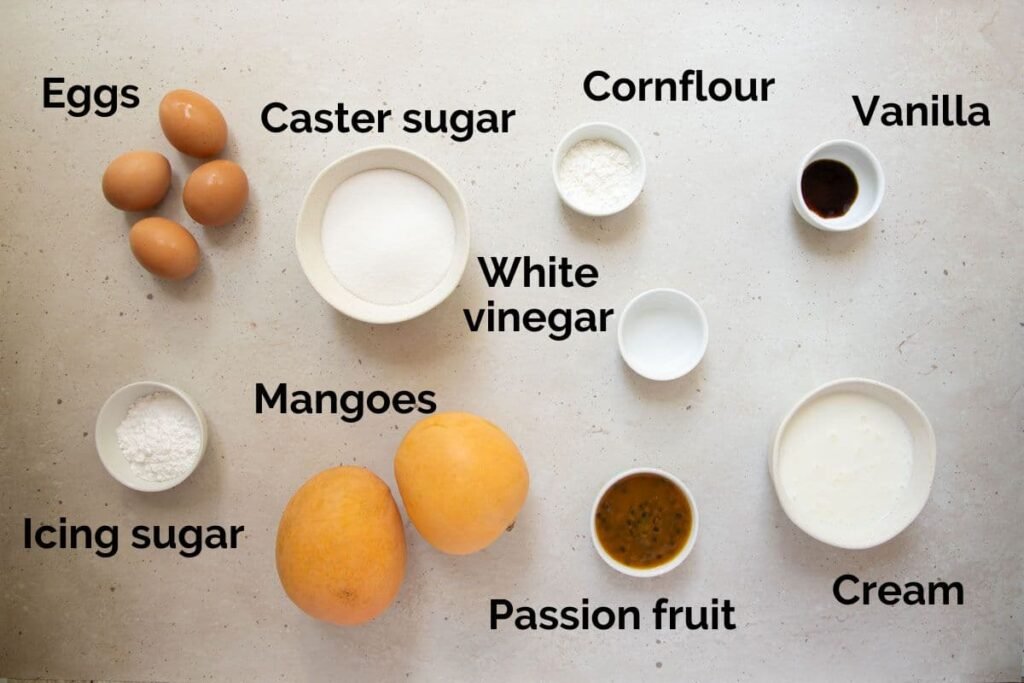
I’ve learned that the right ingredients make all the difference. Here’s what you’ll need for a slab Pavlova that serves about 10–12 people:
- 6 large egg whites (room temperature)
- 1 1/2 cups caster sugar (superfine sugar)
- 2 teaspoons cornstarch
- 1 teaspoon white vinegar
- 1 teaspoon vanilla extract
- 2 cups heavy cream
- 2 tablespoons powdered sugar
- 2 large ripe mangoes
- 4–5 passionfruits (or a can of passionfruit pulp if fresh isn’t available)
- 2 limes (zest and juice)
- Fresh mint leaves (optional)
Non-obvious tip: Make sure your mixing bowl is completely clean and dry before you start beating the egg whites. Even a drop of fat or water can stop the meringue from whipping up properly.
Another insight: Use room temperature eggs. They whip up with more volume, giving you a lighter Pavlova base.
Step-by-step: How To Make Slab Pavlova
It took me a couple of tries to get the texture right, but with these steps, you’ll avoid most mistakes.
1. Prep The Oven And Tray
Preheat your oven to 250°F (120°C). Line a large baking sheet with parchment paper. If you want perfect edges, draw a rectangle on the paper (about 10×14 inches), then flip it over.
2. Whip The Meringue
In a large bowl, beat the egg whites on medium speed until soft peaks form. Slowly add the caster sugar, a tablespoon at a time, beating well after each addition. This makes sure the sugar dissolves. When the meringue is thick and glossy, gently fold in the cornstarch, vinegar, and vanilla.
Practical tip: Rub a little meringue between your fingers. If you feel grains, keep beating—the sugar isn’t dissolved yet.
3. Shape And Bake
Spoon the meringue onto your prepared tray, spreading it into your rectangle. Keep the edges a bit higher so the toppings don’t slide off later. Bake for about 1 hour 15 minutes, then turn off the oven and let the Pavlova cool inside with the door slightly open.
Real-life note: Don’t rush cooling. The meringue can crack badly if you take it out while hot.
4. Whip The Cream
Beat the heavy cream and powdered sugar together until soft peaks form. You want it thick but still soft so it spreads easily.
5. Prepare The Fruit
Peel and slice the mangoes into thin strips or cubes. Scoop out the passionfruit pulp. Zest and juice the limes.
6. Assemble And Serve
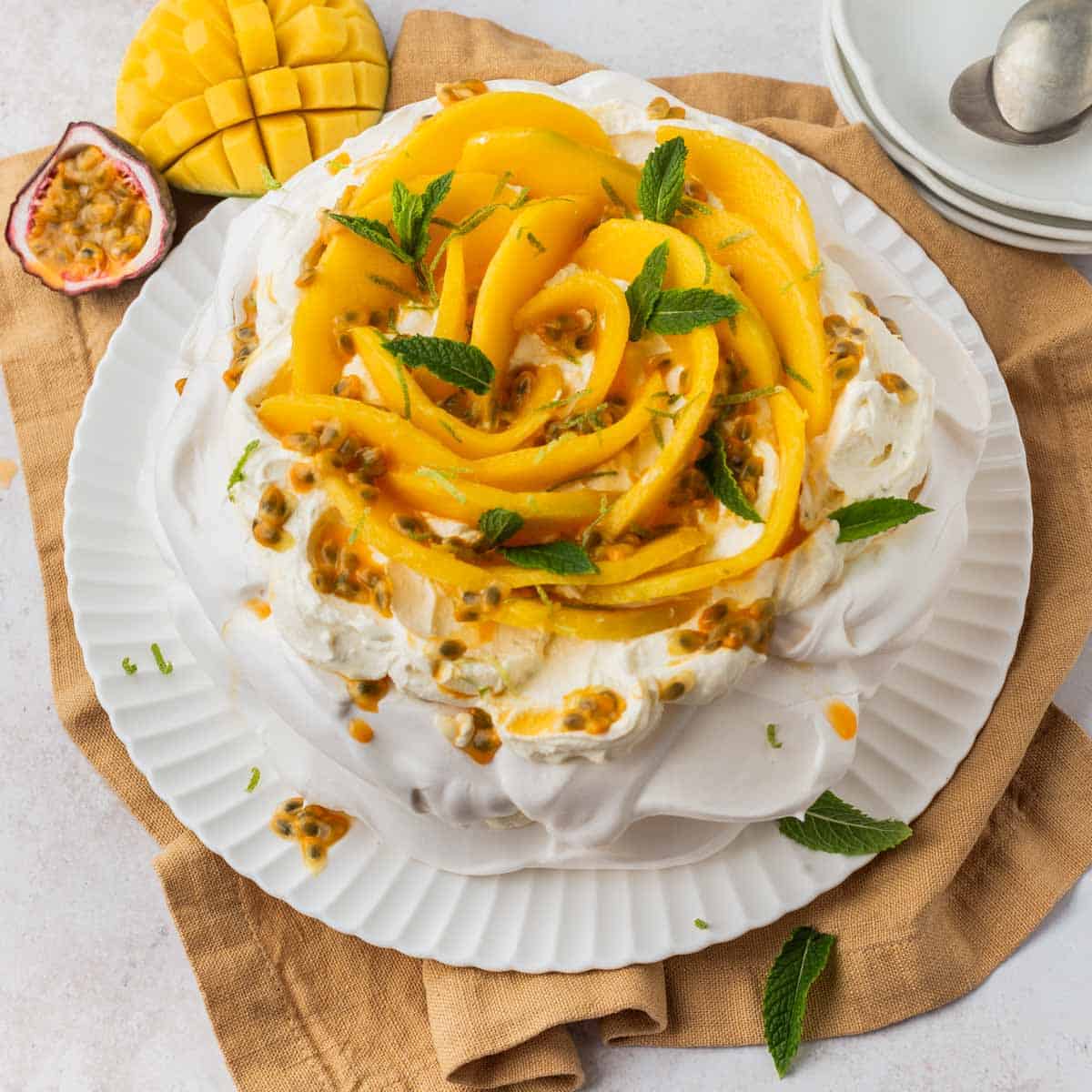
Gently lift the cooled Pavlova onto a serving board. Spread the whipped cream over the meringue. Arrange the mango slices in a pattern, drizzle with passionfruit, and sprinkle with lime zest. Squeeze a little lime juice on top for extra brightness. Add fresh mint if you like.
Pro tip: Assemble just before serving so the Pavlova stays crisp.
How This Pavlova Compares To Other Desserts
I’ve made plenty of desserts, but this one stands out for its balance—crisp, creamy, fresh, and tart. Here’s a quick comparison with other crowd-pleasers:
| Dessert | Texture | Prep Time | Best For |
|---|---|---|---|
| Slab Pavlova | Crispy outside, soft inside | 2 hours (includes cooling) | Large gatherings, outdoor events |
| Fruit Tart | Buttery crust, creamy filling | 2.5 hours | Dinner parties, formal occasions |
| Cheesecake | Dense, creamy | 4+ hours (with chilling) | Birthdays, celebrations |
What I’ve Learned (and What I’d Change)
The first time, I made the mistake of adding the sugar too quickly. My meringue wept and got sticky. Since then, I’ve learned patience is key—add sugar slowly and don’t rush the baking or cooling. Humid days make meringue tricky.
If possible, bake on a dry day.
Another thing: Don’t overload with cream. Too much and the meringue gets soggy fast. Less is more here.
Unexpected bonus: Leftover Pavlova is great for breakfast with Greek yogurt and more fruit.
Serving And Storage Tips
This dessert is best the day it’s made, but you can bake the meringue the night before. Just keep it in the oven (turned off) so it stays dry. Only add cream and fruit when you’re ready to eat.
If you have leftovers, store them in an airtight container in the fridge. The meringue will soften, but the flavors stay bright.
Here’s how long each part lasts:
| Component | Room Temp | Refrigerated |
|---|---|---|
| Meringue base | 12 hours (uncovered) | Not recommended |
| Assembled Pavlova | 2 hours | 1 day |
When To Make Slab Pavlova
This recipe is perfect for spring and summer gatherings. I love making it for Mother’s Day, birthdays, or even just a lazy Sunday when mangoes are at their peak. It feels special but not formal, and people always want to know the recipe.
If you want to read about the history of Pavlova, check out this Wikipedia article. It’s fascinating how this dessert became a favorite in so many countries.
Expert tips
- Use room temperature eggs – cold eggs are harder to whip air into and can cause the mixture to be runny.
- Use clean equipment. Any trace of egg yolk or fats/oils in your bowl will prevent the egg whites from reaching stiff peak stage. Use clean, dry equipment.
- No yolks. Ensure there’s not even a trace of egg yolk in the egg whites when you separate the eggs. Yolks contain fat, which interfere with how the proteins arrange themselves and this can stop the mixture from fluffing up.
- Don’t add the sugar too quickly. Take your time and add 1 tablespoon at a time while beating, until the sugar has fully dissolved. Adding it too quickly can make the meringue grainy and runny, which can cause it to weep.
- Don’t overbeat the egg whites. The pavlova base is made by whisking egg whites into a soft foam (soft peaks) and then slowly adding sugar to incorporate into the foam. During this process, the egg white proteins uncurl and stretch out. This allows air to be trapped in the foam. But if the egg whites are overbeaten, the egg proteins break down and the structure will not hold as much air. This can cause the pavlova to deflate, crack or collapse.
- Don’t beat too fast! Beating the egg whites on a low-medium speed means the air is added slowly, giving you a more stable foam structure and meringue base. It can be tempting to beat them at high speed to speed up the process, but slow and steady is best.
- Baking the pavlova on a low rack in the oven can help to prevent it from cracking.
- Measure the ingredients. Pavlovas are delicate desserts that can be temperamental if variations are made to the recipe. To achieve the perfect texture, weigh and measure the ingredients and adhere to the exact recipe.
- Avoid knocking the air from the meringue mixture! Pavlova depends on the air that has been beaten into the egg whites. The air is what creates the light, airy base. This means no tapping or knocking the bowl, no banging the beaters on the bowl to remove mixture, no slamming oven doors and no stomping around near the oven while the pavlova is baking!
- Pre-heating the oven and then reducing the temperature immediately will help to get the crisp exterior started and stabilise the meringue.
- Don’t open the oven door! It is tempting to sneak a peek and see how the pavlova is going, but a sudden change in temperature can cause it to collapse or crack. Once cooked, leave it in the oven overnight, or for at least 6 hours with the door completely closed to cool completely before moving.
- Topping ideas; I opt for fresh summer fruits like mango and passion fruit, but you can add any seasonal or stewed fruits that you love! Pavlova is the perfect base for any of your favourite dessert toppings! It is fabulous with whipped cream and crushed Peppermint Crisp or Cadbury Flake. Nutella, caramel sauce or lemon curd also make lovely additions. Banana and salted caramel sauce are also perfect for a banoffee version!
- Be careful moving the pavlova onto your serving dish. It will be quite fragile and care should be taken to remove the paper.
- Collapsed pav? If your pavlova collapses, don’t worry! It really is such a forgiving recipe. If the meringue shell cracks or collapses in the middle, it is easy to piece it back together. Just cover it with cream and toppings and no one will even know
Frequently Asked Questions
What If I Can’t Find Passionfruit?
You can use canned passionfruit pulp or swap in kiwi or pineapple. The goal is a tart, juicy fruit to balance the sweetness.
Can I Make Pavlova On A Rainy Or Humid Day?
It’s harder but possible. Meringue absorbs moisture, so bake on the driest day you can. If not, bake a little longer and let it cool in the oven.
What’s The Best Way To Cut Slab Pavlova?
Use a sharp, serrated knife. Wipe the blade between slices for neat squares.
Can I Use Frozen Mango?
Yes, but thaw and drain it well. Fresh mango gives the best flavor and texture.
Is It Gluten-free?
Yes! Pavlova is naturally gluten-free. Just make sure your cornstarch is certified gluten-free if you need it to be.
If you love a dessert that’s as beautiful as it is delicious—and you want something that feels like sunshine on a plate—this slab Pavlova with mango, passionfruit, and lime is worth making. It’s become one of my favorite ways to celebrate any day that deserves a little extra joy.