If you’re like me, you crave dinners that are both healthy and exciting. I spent years searching for meals that give energy, taste amazing, and are easy to throw together after a busy day. That’s how I landed on the Mediterranean Steak Bowl—a dish that checks every box. It’s fresh, colorful, and loaded with nutrients. But most importantly, it’s a meal my family asks for again and again.
I’ll walk you through what makes this bowl special, how I make it at home, and share honest tips that I’ve learned from my own kitchen experiments. Whether you’re new to Mediterranean flavors or want a new weeknight favorite, this bowl brings restaurant vibes right to your table.
Why Mediterranean Steak Bowls Stand Out
When I first tried a Mediterranean steak bowl at a local spot, I was surprised by the balance of flavors. The tender steak pairs with tangy veggies, creamy sauces, and a base of fluffy grains. Unlike heavy takeout, I felt light and satisfied after eating. The Mediterranean diet is famous for being good for your heart, packed with healthy fats, and full of fresh vegetables. Studies show that people who eat this way have lower risks of heart disease and live longer, healthier lives.
I also noticed that my energy stayed steady after eating this meal. There’s no sugar crash or heavy feeling. The mix of protein, fiber, and healthy oils keeps you going for hours. It’s a bowl you can enjoy after work, before the gym, or as a filling lunch.
Ingredients That Make The Difference
A great bowl starts with quality ingredients. I made the mistake once of grabbing cheap, thin-cut steak, and the result was chewy and bland. Now I always choose a steak with good marbling. Here’s what you’ll need for a bowl that serves two hungry adults (with maybe leftovers for lunch):
- 8 oz flank steak (or sirloin/top round)
- 1 cup cooked brown rice (or farro/quinoa)
- 1 cup cherry tomatoes, halved
- 1/2 English cucumber, diced
- 1/3 cup red onion, thinly sliced
- 1/4 cup Kalamata olives, pitted and sliced
- 1/4 cup crumbled feta cheese
- 2 cups baby spinach or chopped romaine
- 1/4 cup hummus (your favorite brand or homemade)
- 2 tablespoons extra-virgin olive oil
- 1 tablespoon fresh lemon juice
- 1 teaspoon dried oregano
- 2 garlic cloves, minced
- Salt and black pepper to taste
Optional Add-ons
- Roasted red peppers
- Sliced avocado
- Fresh parsley or mint
- Tzatziki sauce
- Pickled onions
I keep these extras on hand to mix things up. It’s also a good way to use up odds and ends from the fridge.

How To Build The Perfect Mediterranean Steak Bowl
I used to think bowls like these were only for restaurants, but they’re actually simple once you break down the steps. Here’s my go-to process:
1. Marinate The Steak
Marinating is key. I combine the olive oil, lemon juice, oregano, garlic, salt, and pepper in a zip bag. I add the steak and let it sit for at least 30 minutes (longer if I remember). This step makes the steak juicy and full of flavor.
Skipping it once was a mistake—the steak tasted bland and dry.
2. Prepare The Veggies And Grains
While the steak marinates, I chop the veggies and cook my grain of choice. Brown rice is my usual pick because it’s nutty and filling, but farro and quinoa work well too. I always let the grains cool a bit before assembling, so the greens don’t wilt.
3. Cook The Steak
I heat a grill pan or cast-iron skillet over medium-high heat. I cook the steak about 3-4 minutes per side for medium-rare. I’ve learned not to move the steak around too much—let it get a good sear. After cooking, I rest it for 5 minutes, then slice it thinly against the grain.
This step matters! Slicing the wrong way makes the steak tough.
4. Assemble The Bowl
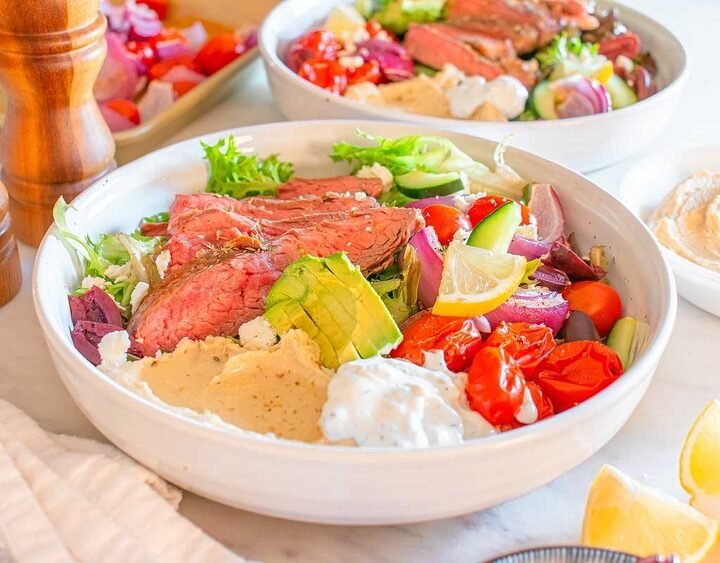
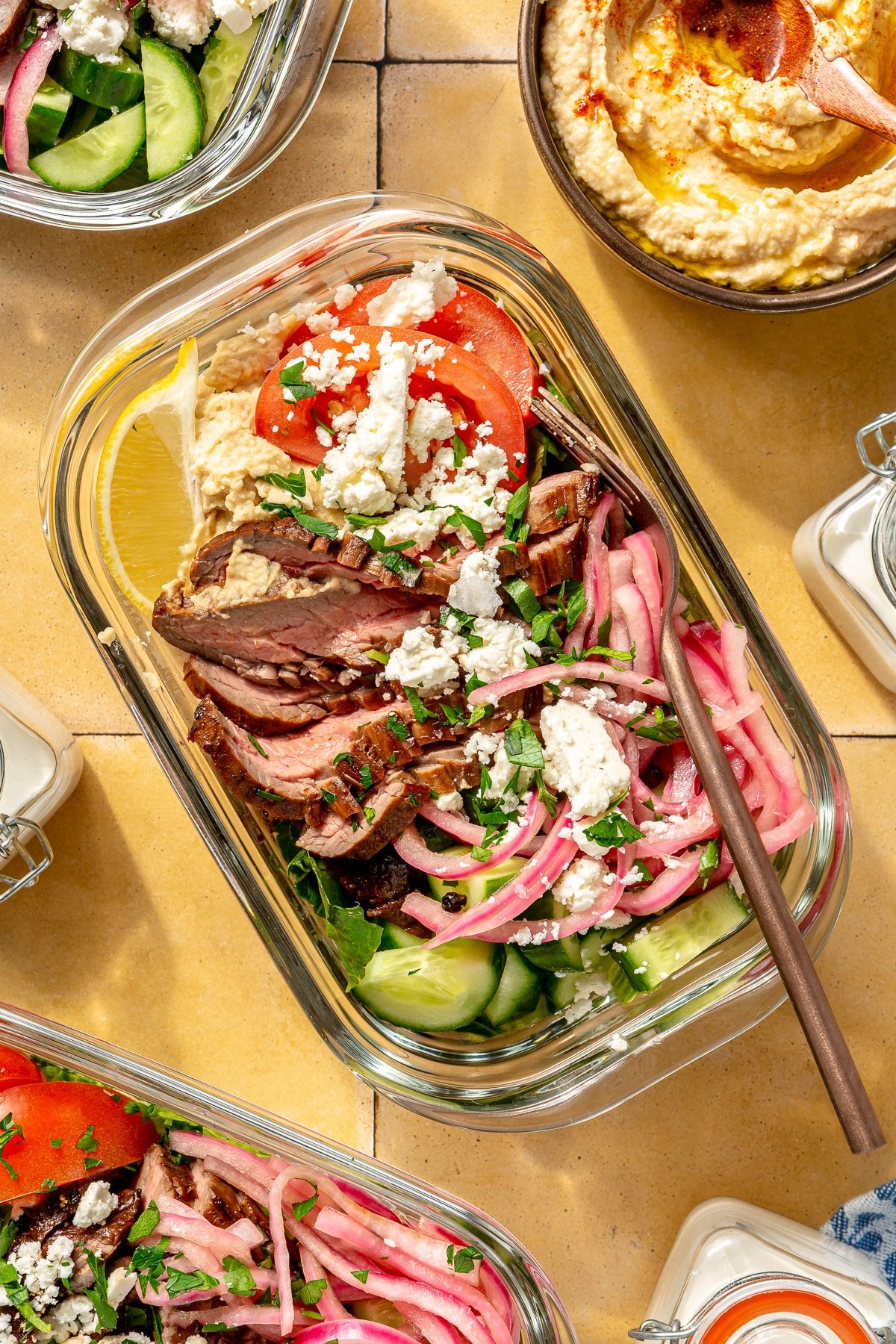
I grab a big bowl and layer in the greens, grains, and veggies. The warm steak goes on top, followed by feta, olives, and a generous dollop of hummus. Sometimes I drizzle with a little extra olive oil and a squeeze of lemon.
5. Finish With Garnishes
Fresh herbs and a sprinkle of paprika or chili flakes add color and a little kick. If I’m feeling fancy, I add a swirl of tzatziki or a spoonful of pickled onions.
Nutrition Breakdown And Why It Matters
I track my meals for energy, and this bowl fits right into a balanced diet. Here’s a simple breakdown for one serving, based on real ingredients:
| Nutrient | Amount (approx.) | Daily Value (%) |
|---|---|---|
| Calories | 520 | 26% |
| Protein | 36g | 72% |
| Carbs | 48g | 16% |
| Fiber | 9g | 32% |
| Fat | 22g | 34% |
| Sodium | 720mg | 31% |
I noticed that after switching to this kind of dinner, I didn’t get that heavy, sluggish feeling at night. The protein helps with muscle recovery if you’re active, and the fiber keeps you full. If you’re watching sodium, go lighter on the feta and olives.
Simple Swaps For Any Diet
One thing I love about these bowls is how easy they are to adapt. My friend is vegetarian, so she swaps the steak for grilled portobello mushrooms or falafel. I’ve also made them with leftover roast chicken or even salmon.
If you’re gluten-free, stick with rice or quinoa for the base.
Here’s a quick table with some common swaps I’ve tried:
| If You Want To… | Use This Instead | Flavor Tip |
|---|---|---|
| Go plant-based | Chickpeas or falafel | Season with cumin and paprika |
| Lower carbs | Cauliflower rice | Roast for extra flavor |
| Change the steak | Chicken breast or shrimp | Marinate longer for juicy texture |
| Try new grains | Farro or bulgur | Add lemon zest before serving |
The Secret To Restaurant-quality Steak At Home
I used to overcook steak because I was nervous about pink centers. But medium-rare is juicy and never tough. Here’s what I do now:
- Let the steak come to room temperature before cooking.
- Pat it dry with paper towels. This helps get a good sear.
- Use a hot pan, don’t overcrowd.
- Rest the steak after cooking. This locks in the juices.
The first time I tried this, the difference was huge. The steak was tender and flavorful, just like a bistro. If you have a meat thermometer, aim for 130–135°F for medium-rare.
Make-ahead Tips For Busy Nights
I don’t always have time to cook from scratch, so I prep parts ahead. Here’s what works:
- Cook grains in bulk on Sunday; store in the fridge for 3-4 days.
- Marinate steak in the morning before work.
- Chop veggies and store them in airtight containers.
- Mix sauces like hummus or tzatziki ahead of time.
On busy nights, I just cook the steak and assemble everything in under 20 minutes. It’s faster than delivery and a lot healthier.
What I Learned From Mistakes
I’ve had bowls that were too salty, too dry, or missing something. Here are two things I wish I’d known sooner:
- Balance is everything. Too much feta or olives can overpower the bowl. I use them as accents, not the main event.
- Freshness matters. Old greens or limp cucumbers make the bowl dull. I buy small amounts and restock often.
If you don’t have every ingredient, don’t stress. It’s the mix of textures—crunchy, creamy, savory—that makes this bowl shine.
Comparing Homemade To Restaurant Bowls
Out of curiosity, I compared my homemade version with takeout from a popular chain. Here’s what I found:
| Aspect | Homemade Bowl | Restaurant Bowl |
|---|---|---|
| Cost (per serving) | $5–7 | $13–16 |
| Calories | 500–550 | 750–900 |
| Customization | Full control | Limited |
| Sodium | Moderate (control) | High |
| Prep time | 25–35 min | 5 min (pickup) |
Making bowls at home saves money, lets you adjust flavors, and keeps nutrition in check. The only downside is washing a few extra dishes. But for me, it’s worth it for the taste and freshness.
How To Serve For Family Or Friends
These bowls are my go-to for casual dinners. I set out all the toppings “buffet style” and let everyone build their own. Kids love picking their favorites, and picky eaters can skip what they don’t like. It’s also a great way to serve guests with food allergies—just keep nuts, dairy, or gluten on the side.
What Makes This A Power Meal?
The Mediterranean steak bowl isn’t just tasty—it’s a power meal because it balances protein, complex carbs, healthy fats, and lots of fiber. This combo helps with muscle repair, steady energy, and gut health. The olive oil and nuts (if you add them) are good for your heart, while the greens and veggies add antioxidants.
I feel good serving this meal to my family because I know exactly what’s in it. Plus, it fits almost any diet goal—from building muscle to managing weight or eating more plants.
Real-world Feedback
After sharing this recipe with friends, I got real feedback. One friend said it was the first time her kids ate spinach without complaints. Another loved how it kept her full until bedtime. A neighbor found it easy to prep ahead for lunch at work.
The main area for improvement? Watch the salt if you use feta and olives together—they add up quickly.
If you want to dig deeper into the benefits of the Mediterranean diet, I recommend reading more at the Harvard School of Public Health.
Frequently Asked Questions
How Do I Keep Steak Juicy For Bowls?
Let the steak rest for 5 minutes after cooking. Always slice against the grain. If you overcook by mistake, add a spoonful of hummus or tzatziki to add moisture.
Can I Make This Bowl Ahead Of Time?
Yes! Store each ingredient separately in the fridge. Assemble right before eating for the best texture. I often pack leftovers for lunch, and they taste great cold or at room temperature.
What’s The Best Grain For A Mediterranean Steak Bowl?
Brown rice, farro, and quinoa all work. If you want more fiber, try farro. For a gluten-free bowl, stick with rice or quinoa.
How Do I Lower The Calories?
Use less oil in the marinade, skip or reduce the feta, and use extra veggies to add volume. Choosing leaner steak cuts also helps.
Is This Meal Good For Meal Prep?
Absolutely. Marinate and cook steak in advance, prep veggies, and store grains in containers. The flavors get even better after a day in the fridge.
If you’re ready for a dinner that’s easy, healthy, and honestly fun to build, give the Mediterranean steak bowl a try. You might find, like I did, that it becomes a weeknight favorite. Experiment, adjust, and enjoy every fresh bite.