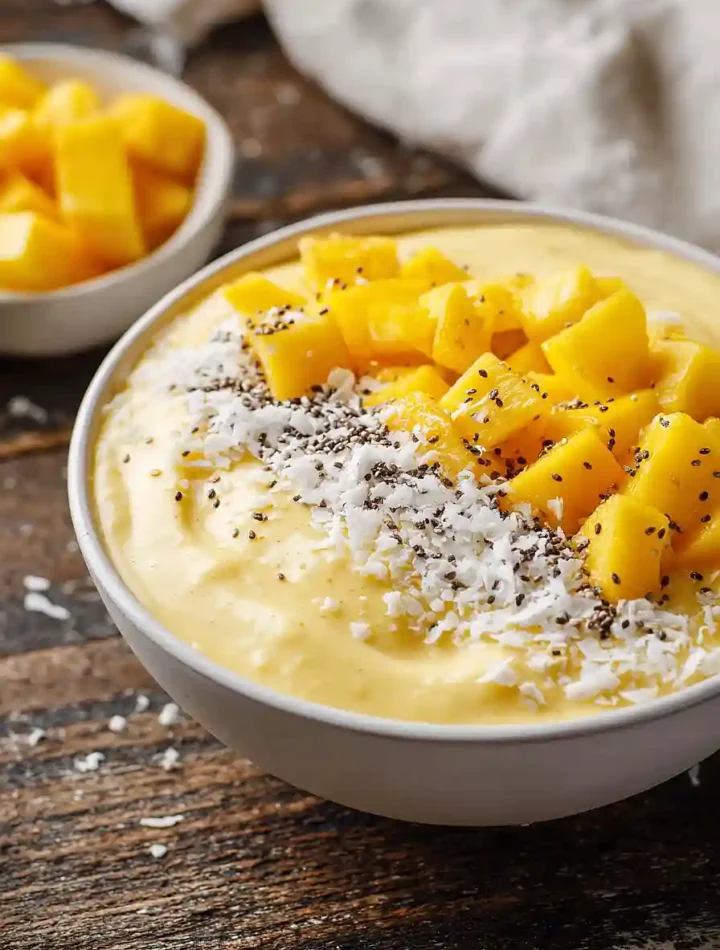
I still remember my first mango smoothie bowl. It was a hot summer morning, and I wanted something cool and refreshing—but also filling. Regular smoothies were nice, but I craved a bowl you could eat with a spoon, full of texture and tropical flavor.
That’s how my easy mango smoothie bowl recipe was born. Over time, I’ve tweaked it to perfection, and now I’m excited to share what I learned so you can make the best tropical smoothie bowl at home.
Why Mango Smoothie Bowls Are So Good
If you love fruit, creamy desserts, and breakfast that feels like a treat, this recipe hits all the marks. Mango is packed with vitamin C and fiber, and its natural sweetness is perfect for smoothie bowls. A mango smoothie bowl isn’t just about flavor. It’s about the experience—eating with a spoon, adding toppings, and making it your own.
I’ve tried a lot of smoothie bowls. Some taste too icy, others are too thin. But when you get the balance right, every bite feels like a mini vacation. Plus, you can prep ingredients ahead of time and make this bowl in under 10 minutes.
Ingredients And Quantities
For one big bowl (or two small ones), you’ll need:
- 1 1/2 cups frozen mango chunks
- 1/2 cup frozen pineapple
- 1 medium banana (preferably frozen)
- 1/2 cup Greek yogurt (plain or vanilla)
- 1/4 cup coconut milk (or any milk you like)
- 1-2 teaspoons honey or maple syrup (optional)
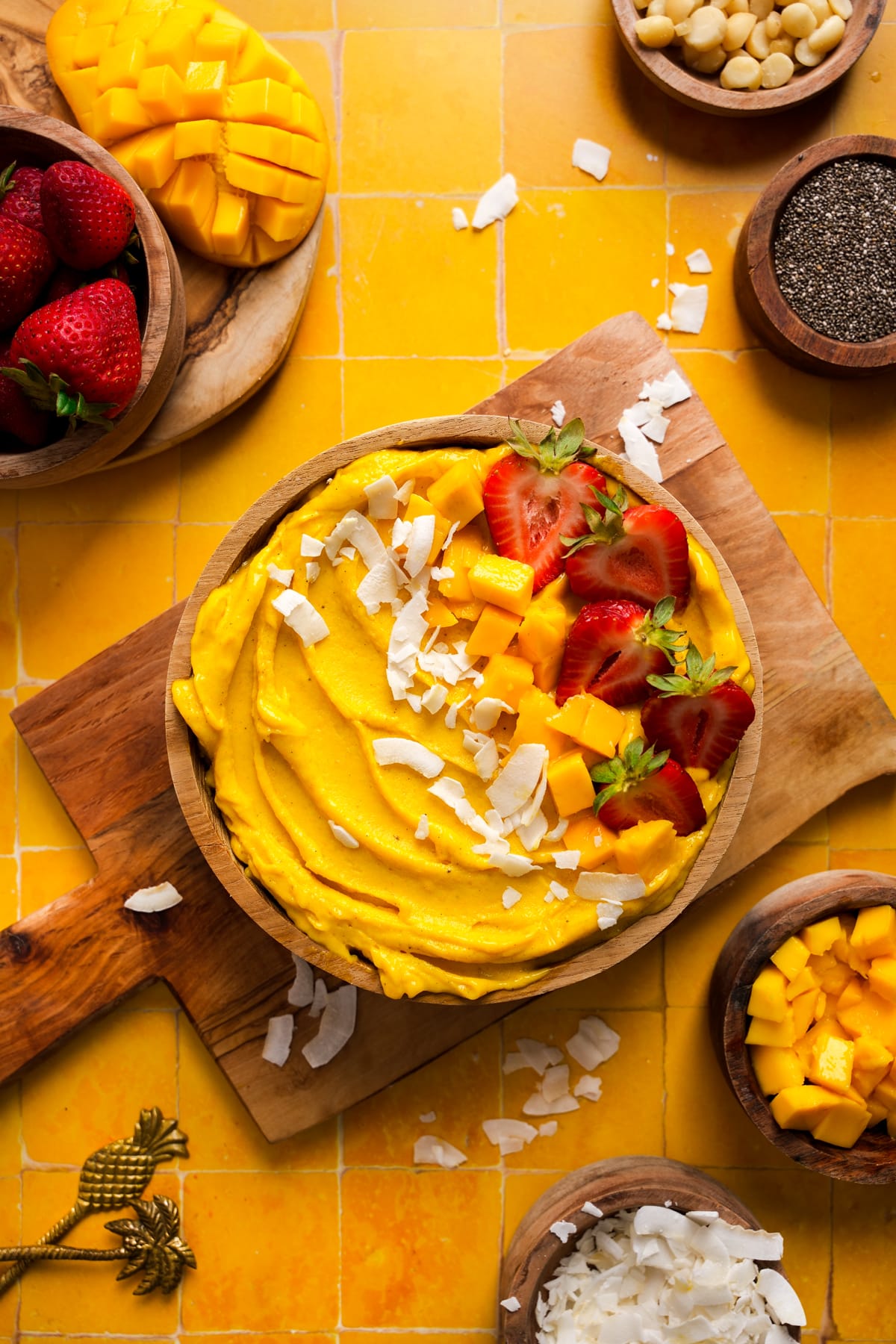
- Toppings: Granola, chia seeds, coconut flakes, fresh berries, sliced banana, kiwi, nuts
You can swap Greek yogurt for plant-based yogurt if you’re dairy-free. For a thicker bowl, use less milk.
How To Make A Mango Smoothie Bowl
Here’s how I make my mango smoothie bowl step by step:
- Blend the fruits: Put the frozen mango, pineapple, and banana into a high-speed blender.
- Add yogurt and milk: Pour in Greek yogurt and coconut milk. If you want it sweeter, add honey.
- Blend until thick: Start blending on low speed, then increase. Scrape down the sides. It should be creamy and thick, not runny.
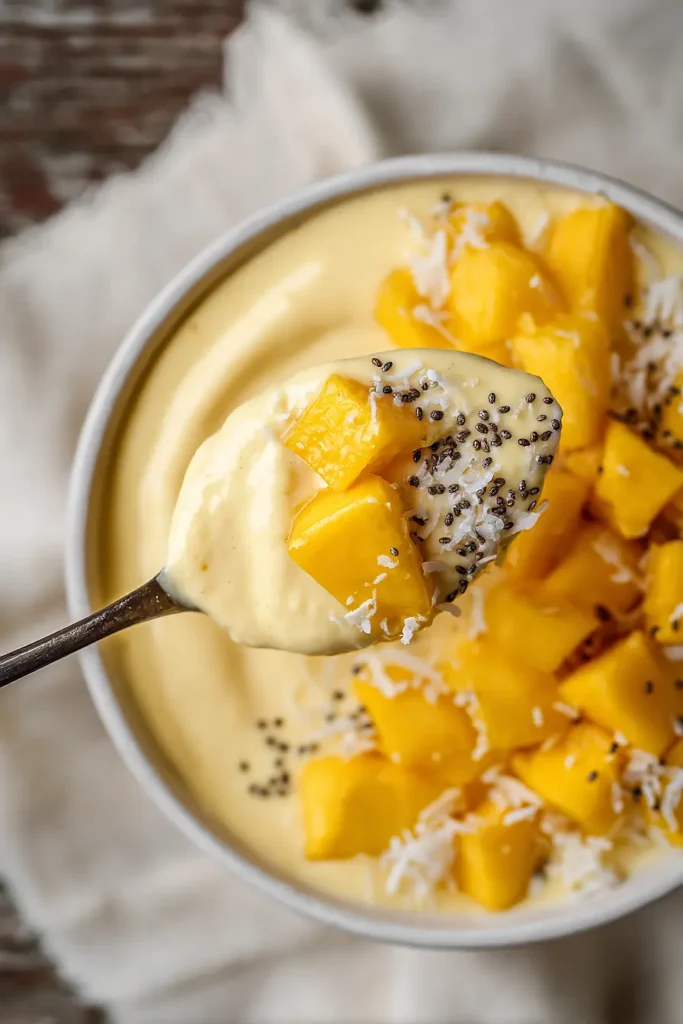
- Pour and decorate: Spoon the smoothie into a bowl. Add your favorite toppings.
I usually top mine with granola, coconut flakes, and fresh berries. Sometimes I add a sprinkle of chia seeds for extra crunch.
Practical Tips
- Use frozen fruit for a thick, ice-cream-like texture.
- If your blender struggles, add a splash more milk—but not too much, or it’ll turn soupy.
- For meal prep, freeze fruit in portions ahead of time.
Why You’ll Love This Mango Smoothie Bowl
- Ready in minutes – This smoothie bowl comes together in just 5-10 minutes, making it perfect for busy mornings when you need a quick breakfast.
- Only 4 ingredients – You don’t need a long shopping list or fancy ingredients to make this tropical treat.
- Naturally sweet and healthy – The mango and banana provide all the sweetness you need without any added sugar, plus you get a good dose of vitamins and fiber.
- Customizable toppings – You can top it with whatever you like—granola, fresh fruit, nuts, or coconut flakes—to make it your own.
Mango Smoothie Bowl Vs. Regular Smoothies
A lot of people ask me: “Why not just drink a mango smoothie?” The difference is all about texture and toppings. Here’s a quick comparison:
| Feature | Mango Smoothie Bowl | Regular Smoothie |
|---|---|---|
| Texture | Thick, spoonable | Thin, drinkable |
| Toppings | Granola, fruit, seeds | Usually none |
| Feeling | Like eating dessert | Quick drink |
| Nutrition | More fiber, varied | Depends on recipe |
I feel more satisfied after a smoothie bowl because it takes longer to eat and you get more crunch and flavor.

Nutritional Benefits
Mango smoothie bowls aren’t just tasty—they’re good for you. Mango is rich in vitamin C (over 60% of daily needs per cup) and vitamin A. Banana adds potassium, while Greek yogurt gives protein and probiotics. Here’s a breakdown of the average nutrition per serving:
| Nutrient | Amount (per bowl) | Percent Daily Value |
|---|---|---|
| Calories | ~350 | 17% |
| Protein | 10g | 20% |
| Fiber | 6g | 24% |
| Vitamin C | 75mg | 83% |
| Potassium | 450mg | 13% |
I noticed I felt more energetic after eating this bowl compared to cereal or toast. It’s a great way to start your day or recover after exercise.
My Honest Experience And What I Learned
When I first made mango smoothie bowls, I thought any blender would work. But I learned that a high-speed blender makes a big difference. Cheap blenders often leave chunks and don’t mix well. If you don’t have one, let the fruit thaw for 5 minutes before blending.
Another thing I learned is that toppings matter. At first, I skipped them to save time. But adding crunchy granola, coconut, or nuts makes every bite better. It’s also fun to decorate your bowl—almost like art.
Sometimes, I made mistakes, like adding too much liquid or skipping the frozen fruit. The bowl turned thin and lost its appeal. Now, I always use frozen mango and pineapple for the best texture.
Common Mistakes And How To Avoid Them
- Using fresh fruit instead of frozen makes the bowl too runny.
- Adding too much milk waters it down.
- Not blending enough leaves chunks.
- Overloading with toppings hides the mango flavor.
Stick to the basics and tweak based on your taste. If you like it extra thick, use less milk. For more sweetness, add a bit more honey.
Variations To Try
If you want to mix things up, try these ideas:
- Swap the yogurt: Use coconut yogurt for a tropical twist.
- Add greens: Blend in spinach for extra nutrition—it won’t change the taste much.
- Try other fruits: Replace pineapple with papaya or add strawberries.
- Boost with protein: Add a scoop of protein powder if you need more energy.
I tried adding spinach once, and it worked well—no strong taste, just more color and nutrients.
Real Data And Recipe Signals
According to the Wikipedia Smoothie page, smoothies are popular because they combine fruits, dairy, and often vegetables for a balanced meal. Smoothie bowls, especially mango-based, are trending for their tropical flavor, Instagram appeal, and health benefits.
Frequently Asked Questions
How Can I Make My Mango Smoothie Bowl Thicker?
Use more frozen fruit and less milk. If it’s still thin, add a handful of ice or a few extra mango chunks.
Can I Make This Recipe Dairy-free?
Yes. Swap Greek yogurt for coconut or almond yogurt, and use plant-based milk.
What Toppings Go Well With Mango Smoothie Bowls?
Granola, coconut flakes, chia seeds, fresh berries, sliced banana, kiwi, and nuts are all great. Pick what you like best.
Is It Okay To Use Fresh Mango Instead Of Frozen?
You can, but the bowl will be thinner and less creamy. Freeze mango chunks ahead for the best result.
How Do I Store Leftovers?
Keep leftovers in an airtight container in the fridge. Eat within 24 hours for best texture. Stir before serving.
If you’re looking for a breakfast that’s easy, healthy, and feels like a treat, this mango smoothie bowl is the answer. It’s simple to make, customizable, and packed with flavor. After many bowls, I can say it’s my favorite way to start the day—especially when I want a tropical escape at home.
Give it a try, tweak it to your taste, and enjoy every spoonful!