Baking at home has always felt like a little adventure to me. I love the smell of a cake rising in the oven, the warmth in the kitchen, and the simple joy of sharing a homemade treat. But sometimes, I want something easy. No fancy ingredients, no complicated steps. And sometimes—like when I’m out of eggs or someone in the family can’t eat them—I need a recipe that works without them.
That’s how I discovered this easy lemon cake with no eggs. I’ve made it so many times now that I honestly prefer it to most of the traditional ones. It’s bright, soft, and full of real lemon flavor. If you’re looking for a cake that’s simple, reliable, and egg-free, this is the one I always recommend.
Why Choose An Egg-free Lemon Cake?
When I started baking without eggs, I worried the cakes might be dense or dry. But I was surprised—this recipe turns out moist and fluffy every time. There are a few good reasons you might want to make an eggless cake:
- Allergies: Eggs are a common allergen, especially for kids.
- Dietary choices: Many people avoid eggs for ethical, religious, or health reasons.
- Convenience: Sometimes you just run out of eggs and don’t want to run to the store.
I’ve found that not using eggs doesn’t mean losing out on taste or texture. In fact, this cake is so light that most people don’t even know it’s egg-free unless I tell them.
Ingredients: What You’ll Need (and Why)
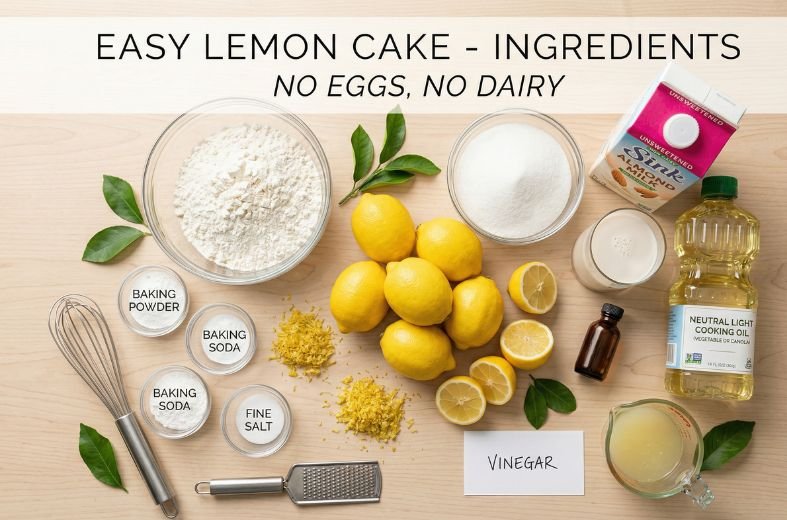
One thing I love about this recipe: most of the ingredients are pantry staples. No complicated substitutions, no need to hunt for rare items. Here’s what goes into my favorite easy lemon cake:
- All-purpose flour: 2 cups (240g). This gives structure to the cake.
- Granulated sugar: 1 cup (200g). For sweetness and moisture.
- Baking powder: 2 teaspoons. Helps the cake rise and stay fluffy.
- Baking soda: 1/2 teaspoon. Works with the acid in lemon juice for extra lift.
- Salt: 1/2 teaspoon. Balances the flavors.
- Lemon zest: From 2 large lemons. Adds strong, fresh lemon aroma.
- Fresh lemon juice: 1/3 cup (80ml). Gives the cake its bright taste.
- Milk: 1 cup (240ml). You can use dairy or non-dairy.
- Neutral oil: 1/2 cup (120ml). I usually use canola or sunflower oil.
- Plain yogurt: 1/2 cup (120g). Adds moisture and replaces the richness of eggs.
- Vanilla extract: 1 teaspoon. Rounds out the flavors.
Optional (for Glaze):
- Powdered sugar: 1 cup (120g).
- Lemon juice: 2-3 tablespoons (30-45ml).
- Lemon zest: A pinch for extra zing.
Why These Ingredients?
When you don’t use eggs, you need something for moisture, richness, and lift. Here, yogurt and oil make the cake soft and tender. The baking powder and baking soda work together to make the crumb light. And the lemon? That’s the star. I always use both juice and zest for the brightest flavor.
Ingredient Comparison
Sometimes people ask if you can swap things out. Here’s a quick look at what I’ve tried and what works best:
| Ingredient | Best Substitute | Effect on Cake |
|---|---|---|
| Milk | Oat, almond, or soy milk | Makes cake dairy-free, still moist |
| Yogurt | Unsweetened applesauce | Softer crumb, a bit sweeter |
| Oil | Melted coconut oil or light olive oil | Slight flavor change, but still soft |
| Sugar | Coconut sugar or cane sugar | Darker color, mild caramel taste |
From my experience, the original ingredients above give you the most classic lemon cake flavor. But I’ve tried these swaps on days when I was low on something, and they all work in a pinch.
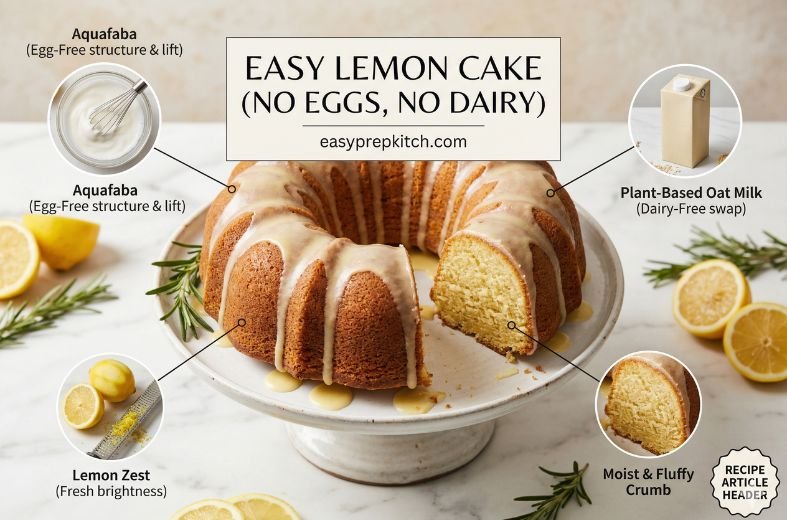
Step-by-step Instructions: My Foolproof Method
I like recipes that don’t make me nervous—no separating eggs, no folding, just mix and bake. Here’s how I make this cake every time:
- Preheat your oven to 350°F (175°C). Grease a 9-inch (23cm) round pan or an 8×8-inch (20x20cm) square pan. I sometimes use parchment paper for easy lifting.
- Mix the dry ingredients. In a large bowl, whisk together the flour, sugar, baking powder, baking soda, and salt. Add the lemon zest and stir to distribute the flavor.
- Combine the wet ingredients. In a separate bowl or large measuring jug, mix the milk, oil, yogurt, lemon juice, and vanilla. Stir until smooth.
- Bring it all together. Pour the wet ingredients into the dry. Gently fold with a spatula or wooden spoon until just combined. It’s okay if the batter is a little lumpy—don’t overmix.
- Pour into the pan. Scrape the batter into your prepared pan. Smooth the top a bit with your spatula.
- Bake for 32–38 minutes. The time depends a bit on your oven and pan. I always check at 30 minutes with a toothpick. If it comes out clean or with just a crumb or two, it’s done.
- Cool before glazing. Let the cake cool in the pan for 15 minutes, then turn out onto a rack. Wait until it’s fully cool before adding glaze, or the glaze will melt right off.
For The Glaze:
Mix 1 cup powdered sugar with 2–3 tablespoons lemon juice. Add a little zest if you like. Drizzle over the cooled cake and let it set for 15 minutes.
Real-life Tip:
If you’re in a hurry, you can skip the glaze and dust with powdered sugar. But for special occasions, the glaze really makes it feel fancy.
What Makes This Cake Special?
When I serve this cake, people are always surprised when I say there are no eggs. Here’s what stands out to me (and my friends):
- Bright lemon flavor: Using both zest and juice makes the cake taste like sunshine.
- Tender crumb: The yogurt and oil keep it soft for days.
- No weird aftertaste: Some egg-free cakes can taste a bit flat. This one doesn’t.
- Stays moist: Even after two days on the counter, it’s still good.
One thing I noticed: the cake texture is even softer the next day. I sometimes bake it the night before a get-together, and it slices perfectly in the morning.
Common Questions And Troubleshooting
Why Did My Cake Turn Out Dense Or Gummy?
The most common reason is overmixing the batter. When you stir flour too much, the gluten develops and makes cakes tough. I always mix by hand, never with a mixer, and stop as soon as the flour is incorporated.
Can I Double The Recipe?
Yes, but use two pans or a larger 9×13-inch pan. The baking time may go up by 5–10 minutes. Make sure you check with a toothpick in the center.
Why Use Both Baking Powder And Baking Soda?
This is a little baking science. The baking soda reacts with the lemon juice to give an instant lift and helps with browning. The baking powder gives a slower, steady rise. Together, they make the cake fluffy without eggs.
Is There A Vegan Option?
Absolutely. Just use a non-dairy milk (like almond or oat) and a plant-based yogurt. I’ve made it this way for friends who avoid all animal products, and it works beautifully.
How Do I Know When The Cake Is Done?
I always check with a toothpick in the center. If it comes out clean or with a few crumbs, the cake is ready. If you see wet batter, give it another 3–5 minutes and check again. Cakes can go from underbaked to perfect very quickly, so keep an eye on them.
Experience-based Tips For The Best Lemon Cake
Over the years, I’ve made this cake for birthdays, picnics, and just regular weekends. Here are a few things I’ve learned that can really make a difference:
1. Use Fresh Lemons
Bottled lemon juice just isn’t the same. The zest is where the real flavor lives. I use a microplane grater and zest right over the mixing bowl so none of the oils are lost.
2. Don’t Skip The Yogurt
I once tried using all milk when I was out of yogurt. The cake was fine, but it wasn’t as rich or moist. The yogurt really makes up for the eggs.
3. Taste The Glaze Before Pouring
Sometimes lemons are more tart, sometimes sweeter. I always taste the glaze and adjust the sugar or juice to get the sweet-tart balance I like.
4. Rest Before Slicing
Like banana bread, this cake actually gets better if you let it cool completely. I know it’s hard to wait, but the crumb sets and the flavor develops.
5. Store In An Airtight Container
This cake stays moist for 2–3 days at room temperature if you cover it well. If you live somewhere humid, you can keep it in the fridge, but let it come to room temperature before eating for the best texture.
How Does This Lemon Cake Compare To Regular Cakes?
I’ve baked a lot of cakes—with and without eggs. Here’s what I’ve noticed about this one compared to a traditional lemon cake:
| Feature | Easy Lemon Cake (No Eggs) | Traditional Lemon Cake (With Eggs) |
|---|---|---|
| Texture | Light, moist, tender | Rich, sometimes denser |
| Flavor | Strong lemon, clean finish | Lemon with egg undertones |
| Allergy-friendly | Yes (egg-free, easily dairy-free) | No (contains eggs) |
| Preparation | Simple, one bowl, no creaming | Often requires beating, separating |
| Storage | Stays moist for days | Can dry out faster |
The only thing you might miss is a bit of “springiness” from the eggs, but honestly, most people never notice. The ease and allergy-friendliness more than make up for it.
Variations: Making The Recipe Your Own
The base recipe is fantastic, but over time I’ve played with different twists. Here are a few favorites:
Lemon Blueberry Cake
Fold 1 cup fresh blueberries into the batter before baking. Dust them with a little flour first to keep them from sinking.
Lemon Poppy Seed
Add 2 tablespoons poppy seeds to the dry ingredients. It adds a nice crunch and looks pretty.
Orange Or Lime Cake
Swap the lemon zest and juice for orange or lime. The cake works with any citrus, but lemon is the most classic.
Simple Sheet Cake
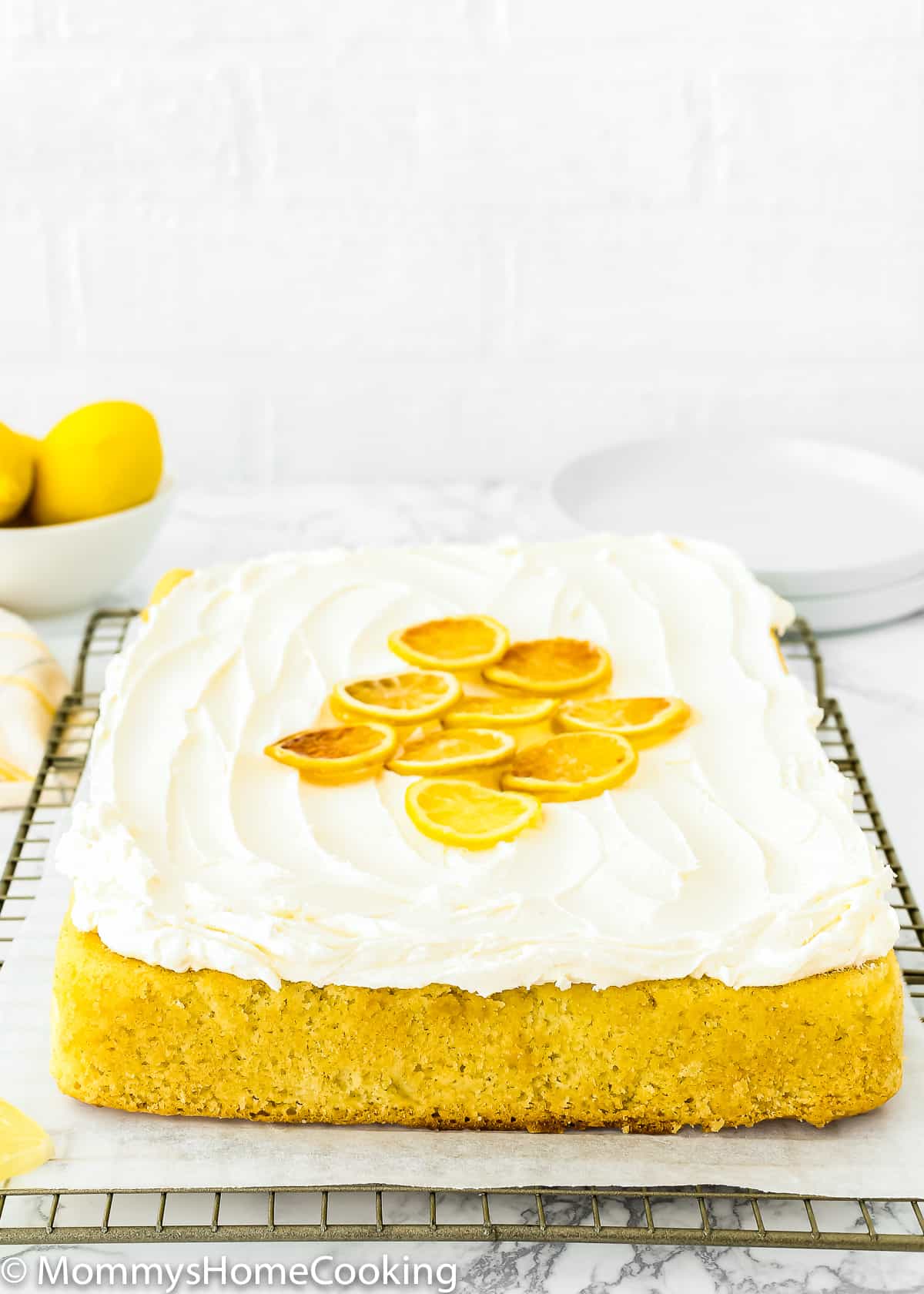
Double the recipe and bake in a 9×13-inch pan. Top with a thin layer of glaze and cut into squares—perfect for parties.
Cupcakes
Scoop the batter into lined muffin tins (fill about 2/3 full). Bake for 18–20 minutes. Makes about 12 cupcakes.
These variations mean you can use the same basic recipe all year long and never get bored.
Nutritional Information And Portion Sizes
People often ask how this cake fits into their diet. I’m not a nutritionist, but here’s what I can share from my experience and a quick calculation based on the ingredients:
- Serving size: 1/10 of the cake (about a small slice)
- Calories: About 230 per slice (with glaze)
- Fat: 7g
- Carbohydrates: 38g
- Sugar: 22g
- Protein: 3g
If you want to make it a bit lighter, you can use low-fat yogurt and reduce the sugar a little. But remember, it’s still a treat!
Real-world Challenges: What Can Go Wrong?
I want to be honest—no recipe is perfect every single time, and kitchens are unpredictable places. Here are a few real-life hiccups I’ve had and what I did:
Cake Stuck To The Pan
This happened once when I forgot to grease the sides well. Now, I use both oil and a strip of parchment paper on the bottom. The cake comes out clean every time.
Sunken Center
If you overmix the batter or open the oven too early, the cake can collapse a bit in the middle. I now set a timer for 30 minutes and only check then. Patience pays off.
Too Sour Or Too Sweet
Lemons vary a lot. If your cake is too tart, a bit more glaze balances it. If it’s too sweet, try adding a bit more zest next time for punch.
Dry Cake
This has happened when I left the cake in the oven too long. Every oven is different, so I recommend checking a few minutes before the end of the baking time.
When To Serve This Cake
I’ve brought this easy lemon cake to so many occasions. Here are some of the best:
- Afternoon tea: It’s light and pairs well with tea or coffee.
- Birthday parties: Especially for guests with allergies.
- Picnics: Travels well and doesn’t need refrigeration.
- Potlucks: People are always excited to try something homemade and allergy-friendly.
- Everyday treat: Sometimes I just bake it on a Sunday afternoon to have something sweet all week.
Why This Recipe Builds Confidence
The first time I baked without eggs, I was nervous. But this cake came out so well that it made me want to try more egg-free recipes. It’s almost impossible to mess up if you follow the steps. And when you serve it, people are always impressed.
I love sharing this recipe because it’s simple, flexible, and always delicious.

For More About Egg-free Baking
If you want to learn more about baking without eggs, I’ve found the Wikipedia page on egg substitutes really useful. It explains why certain swaps work and how to adapt other recipes, too.
Frequently Asked Questions
Can I Freeze This Lemon Cake?
Yes, this cake freezes well. Let it cool completely, wrap slices tightly in plastic wrap or foil, and freeze for up to 2 months. Thaw at room temperature for a few hours before serving. I find the texture is just as good after freezing.
Can I Use Whole Wheat Flour Instead Of All-purpose?
You can, but the cake will be a bit denser and have a heartier taste. I sometimes use half whole wheat and half all-purpose flour for a balance between health and texture.
Can I Add Nuts Or Seeds?
Definitely. Chopped walnuts or almonds add a nice crunch. I usually add about 1/2 cup to the batter. Sunflower or pumpkin seeds work too, especially if you want a nut-free version.
What If I Don’t Have Yogurt?
Plain unsweetened applesauce works well as a yogurt replacement. Use the same amount. The cake will be a bit softer and sweeter, but still delicious.
How Do I Make The Cake Gluten-free?
I’ve had success using a 1:1 gluten-free flour blend. The texture is slightly different—more crumbly—but the flavor is just as bright. Make sure your baking powder is also gluten-free.
Baking this easy lemon cake with no eggs has become one of my favorite kitchen traditions. It’s the recipe I turn to when I want something bright and comforting, and when I want to share a treat with everyone—no matter their dietary needs.
If you try it, I hope you’ll love it as much as I do. Happy baking!